The 2026 Evolution of Live TV Streaming: Comparing Latency and Channel Availability Across 3 Top Services for Sports Fans
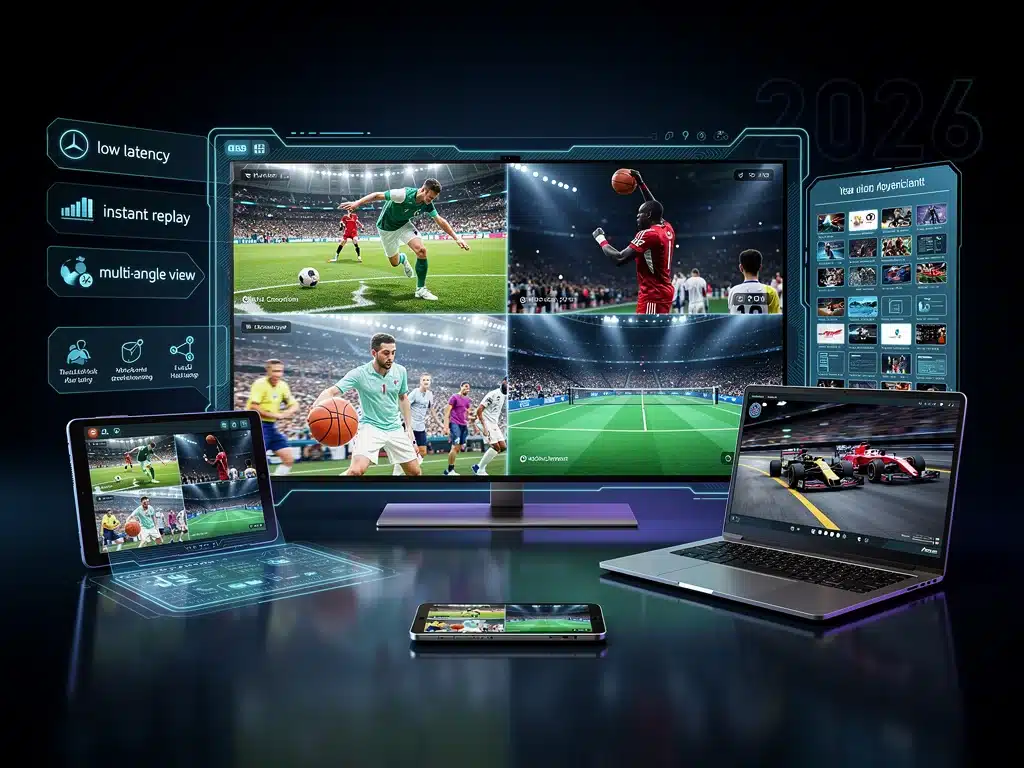
There is nothing worse than hearing your neighbors cheer for a touchdown before you even see the play happen. Getting your setup right for 2026 Live TV Streaming means conquering that frustrating broadcast delay while ensuring you actually get the networks broadcasting the big game.
As premium athletic events rapidly migrate away from traditional cable, choosing the right digital provider has become a strategic play. To get the ultimate cord-cutting experience, you need a platform that pairs real-time transmission speeds with comprehensive network coverage.
This breakdown compares three major cord-cutting platforms to see which service offers the lowest lag and the best channel lineup for die-hard fans. Let’s cut through the lag and find your perfect digital grandstand this season.
Understanding Latency in 2026 Live TV Streaming
Latency, the delay between a live event and its broadcast on your screen, remains a critical concern for sports fans.
In the fast-paced world of live sports, even a few seconds can mean the difference between celebrating a goal in real-time and seeing your neighbor’s cheer before the play unfolds on your screen.
The 2026 evolution of live TV streaming promises significant strides in reducing this delay, driven by advancements in encoding, distribution networks, and edge computing.
Services are investing heavily to minimize the time lag, aiming for a near real-time experience that rivals traditional broadcast television.
For sports fans, lower latency translates to a more immersive and interactive viewing experience, reducing spoilers from social media or external sources. This technical improvement is a cornerstone of the projected enhancements in 2026 live TV streaming services.
The Technical Battle for Minimal Delay
Streaming providers are employing sophisticated technologies to combat latency, including optimized content delivery networks (CDNs) and advanced video codecs. These innovations work in tandem to process and transmit live video data with unprecedented speed and efficiency.
Another key area of development is the adoption of low-latency streaming protocols, specifically designed to reduce buffering and transmission delays. This technological arms race is directly benefiting consumers, particularly those who demand immediate access to live sports action.
The push for minimal delay is not just about technology; it’s about meeting viewer expectations for a truly live experience. The 2026 evolution of live TV streaming heavily emphasizes this aspect.
Impact of Network Infrastructure on Latency
The quality of your internet connection and the infrastructure of the streaming service both play pivotal roles in determining actual latency. Fiber optic networks and 5G mobile technology are crucial enablers for achieving ultra-low latency streaming in 2026.
Services that leverage robust and geographically distributed server networks tend to offer better performance, as data travels shorter distances to reach viewers. This infrastructure investment is a significant differentiator among top streaming providers.
Ultimately, the synergy between advanced streaming technology and high-speed internet infrastructure will define the latency experience for sports fans in the 2026 live TV streaming era.
Channel Availability: The Breadth of Sports Content in 2026
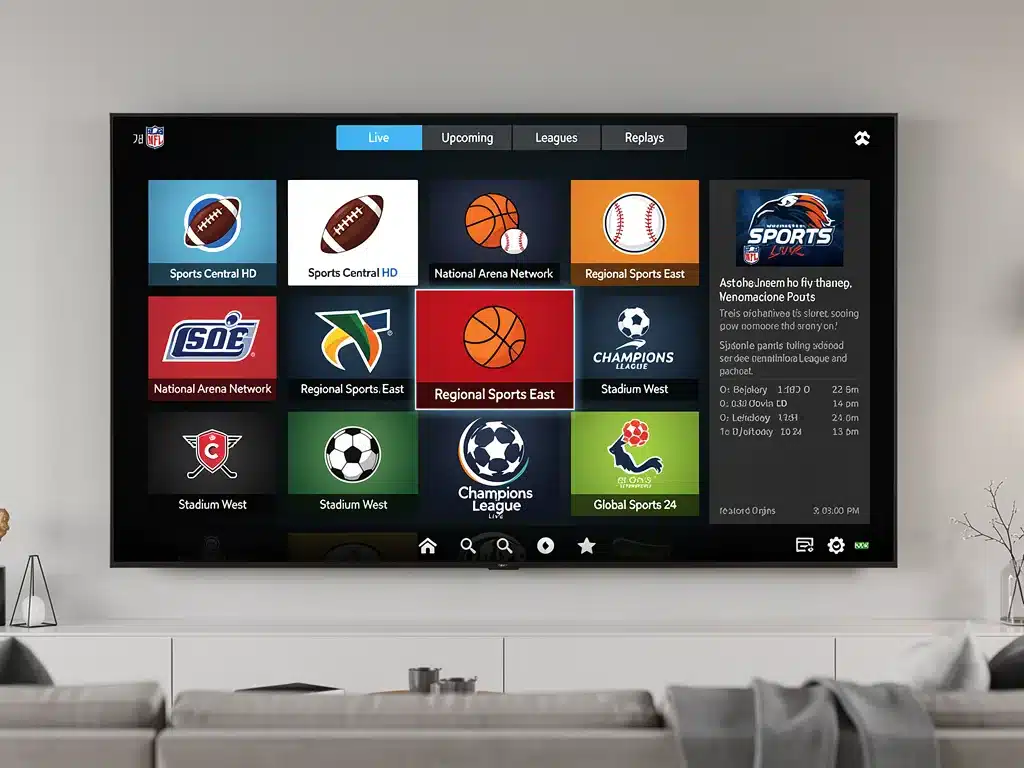
Beyond latency, the sheer breadth of sports content, or channel availability, is a decisive factor for sports fans choosing a streaming service. This includes access to major national sports networks, regional sports networks (RSNs), and specialized international sports channels.
As we approach 2026, the landscape of sports broadcasting rights continues to fragment, making a comprehensive channel lineup even more valuable. Services that can aggregate a wide array of sports content under one subscription will undoubtedly attract a larger audience.
The 2026 evolution of live TV streaming is characterized by strategic partnerships and content acquisitions, with platforms vying to offer the most complete sports packages. This competition is a boon for sports enthusiasts.
National and Regional Sports Network Access
Access to national sports networks like ESPN, Fox Sports, and CBS Sports is a baseline expectation for any serious sports streaming service. However, the true test lies in their ability to carry regional sports networks.
RSNs are crucial for local fans to follow their favorite MLB, NBA, and NHL teams, and their inclusion often dictates a service’s appeal in specific geographic areas. The negotiation of RSN contracts is a complex and ongoing challenge for streaming providers.
In 2026, services that successfully navigate these complexities to offer robust RSN coverage will gain a significant competitive edge, catering directly to the loyal regional fan bases.
Specialized and International Sports Offerings
For fans with diverse sporting interests, the availability of specialized and international sports channels is increasingly important. This includes networks dedicated to specific sports like golf, tennis, or soccer, as well as channels broadcasting leagues from around the world.
The global nature of sports fandom means that a truly comprehensive service must extend beyond domestic leagues and major events. The 2026 live TV streaming market will see services expanding their international content to capture this growing demand.
Providing a wide range of niche sports and international coverage enhances a service’s value proposition, appealing to a broader spectrum of sports enthusiasts and solidifying its position in the market.
Top 3 Services for Sports Fans: A 2026 Outlook
Analyzing the top three services for sports fans as we look towards 2026 involves evaluating their current offerings and their strategic plans for future enhancements. These services are constantly evolving, adapting to technological shifts and consumer demands.
Our assessment considers their existing infrastructure, content acquisition strategies, and commitment to improving the live viewing experience.
The goal is to provide a forward-looking perspective on which platforms are best positioned to dominate the 2026 live TV streaming market.
Each service presents a unique blend of strengths and weaknesses, making the choice highly dependent on individual viewer priorities. Understanding these distinctions is key to an optimal sports streaming experience.
Service A: Focus on Premium Latency and Major Leagues
Service A has historically invested heavily in its core streaming technology, consistently aiming for the lowest possible latency. Their infrastructure is designed for high-speed delivery, making them a strong contender for real-time sports viewing in 2026.
Their channel lineup prioritizes major national sports networks and has secured exclusive streaming rights for several high-profile leagues and events. This strategy appeals to fans primarily interested in top-tier professional sports.
While their RSN coverage might be more selective, their commitment to minimal delay and premium content positions them as a leading option for the discerning sports fan in the 2026 live TV streaming landscape.
Service B: Comprehensive Channel Lineup and Growing RSN Access
Service B distinguishes itself with an exceptionally broad channel lineup, including extensive regional sports network coverage across many key markets. This makes it an attractive option for fans who follow local teams closely.
Their latency, while competitive, may not always match the absolute lowest numbers seen in specialized services, but it remains well within acceptable parameters for most viewers. They are actively working on infrastructure upgrades to close this gap by 2026.
The strength of Service B lies in its ability to offer a near-complete sports package, reducing the need for multiple subscriptions. Their ongoing efforts to expand RSN access further solidify their position for the 2026 evolution of live TV streaming.
Service C: Innovation in Features and Niche Sports
Service C is known for its innovative features, such as multi-view options, interactive statistics overlays, and enhanced replay capabilities. These features significantly enrich the live sports viewing experience, going beyond simple broadcast delivery.
Their channel availability is robust, with a particular strength in niche sports and international leagues that might be overlooked by other providers. This caters to a diverse audience with specific sporting interests.
While their latency is generally good, their primary differentiator for 2026 live TV streaming is the enhanced interactive experience and specialized content. This makes them ideal for tech-savvy fans seeking more than just a traditional broadcast.
Technological Advancements Driving 2026 Streaming Evolution
The rapid pace of technological innovation is a primary driver behind the 2026 evolution of live TV streaming. From advanced video compression to artificial intelligence, new tools are continually emerging to enhance both quality and efficiency.
These advancements are critical for meeting the ever-increasing demands of consumers for higher resolution, lower latency, and more interactive viewing experiences. The streaming industry is at the forefront of adopting these cutting-edge technologies.
Understanding these underlying technological shifts provides insight into the future capabilities and potential of live sports streaming platforms as we approach 2026.
5G and Edge Computing: The Latency Game Changers
The widespread deployment of 5G networks is set to revolutionize mobile streaming, offering unprecedented speeds and significantly reduced latency. This will enable high-quality live sports viewing on the go, rivaling home broadband connections.
Coupled with 5G, edge computing brings processing power closer to the user, further minimizing data travel time and boosting responsiveness. This combination is a powerful force in achieving sub-second latency for live sports by 2026.
These technologies are not just incremental improvements; they represent a fundamental shift in how live content can be delivered, profoundly impacting the 2026 evolution of live TV streaming.
AI and Personalization in Sports Broadcasting
Artificial intelligence is increasingly being utilized to enhance the sports viewing experience, offering personalized content recommendations and dynamic ad insertion. AI algorithms can analyze viewer preferences to suggest relevant games, highlights, and even commentary.
Beyond personalization, AI can also assist in optimizing video quality and reducing bandwidth consumption, leading to a smoother and more efficient stream. This intelligent optimization is crucial for managing the vast amounts of data involved in live sports.
By 2026, AI-driven features will be a standard expectation, transforming how fans discover and interact with sports content. This intelligent layer is a key component of the 2026 live TV streaming experience.
The Future of Sports Rights and Exclusivity in 2026
The battle for sports broadcasting rights is intensifying, with streaming services becoming major players alongside traditional broadcasters. This competition is reshaping the landscape of sports content distribution and exclusivity.
As we head into 2026, expect to see more exclusive streaming deals for major leagues and tournaments, forcing fans to consider multiple subscriptions to access all their desired content. This trend directly impacts channel availability across services.
Understanding the evolving nature of sports rights is crucial for predicting which services will offer the most comprehensive sports packages in the 2026 live TV streaming era.
Fragmented Rights and Multi-Platform Viewing
The fragmentation of sports rights means that no single platform is likely to offer every single game or league. Fans may need to subscribe to several services to catch all their favorite teams and events.
This multi-platform viewing approach is becoming the norm, requiring consumers to carefully evaluate which combination of services best meets their needs. The cost and complexity of managing multiple subscriptions will be a key consideration.
The 2026 evolution of live TV streaming will likely solidify this fragmented model, pushing services to differentiate themselves through exclusive content bundles or unique viewing features.
Direct-to-Consumer Models by Sports Leagues
Several major sports leagues are exploring or have already launched their own direct-to-consumer (DTC) streaming services. These platforms offer an alternative way to access games, bypassing traditional broadcasters and aggregators.
While DTC services provide direct access to specific league content, they may not offer the broader range of sports available on general streaming platforms. This creates another layer of choice and complexity for sports fans.
The growth of league-specific DTC offerings will be a significant trend influencing the 2026 live TV streaming market, potentially impacting the channel availability on third-party services.
User Experience and Interactivity in 2026 Streaming
Beyond raw performance metrics like latency and channel count, the overall user experience and interactive features will be paramount in the 2026 evolution of live TV streaming. Services are continuously refining their interfaces and adding innovative functionalities.
A seamless, intuitive interface that allows for easy navigation and content discovery is essential for viewer satisfaction. Features like personalized dashboards, robust search capabilities, and cross-device compatibility enhance the overall usability.
The goal is to create an engaging and personalized environment that makes watching live sports more enjoyable and accessible than ever before.
Personalized Viewing and Multi-Screen Options
The ability to personalize the viewing experience is a growing demand. This includes customizable dashboards, preferred team alerts, and tailor-made highlight reels. Services are leveraging data to offer truly unique experiences.
Multi-screen options, allowing viewers to watch multiple games simultaneously or track stats on a second screen, are also becoming standard. This caters to the modern sports fan who wants to consume more information and action at once.
These personalized and multi-screen capabilities will be defining characteristics of the 2026 live TV streaming experience, setting leading services apart.
Integrated Social Features and Community
Integrating social features directly into streaming platforms allows fans to connect and interact with each other during live events. This can include live chats, polls, and shared viewing parties, fostering a sense of community.
The social aspect of sports viewing is powerful, and streaming services are recognizing the value of facilitating these connections within their platforms. This creates a more dynamic and engaging environment than traditional broadcasts.
By 2026, expect to see more sophisticated social integrations, making the 2026 live TV streaming experience not just about watching, but also about participating in a shared fan culture.
The Economic Landscape: Pricing and Subscription Models for 2026
The economic models behind live TV streaming services are constantly evolving, with pricing strategies and subscription tiers adapting to market demands and competitive pressures. For 2026, consumers can expect a variety of options.
Services are balancing the need to cover content acquisition costs and technological investments with the desire to remain competitive and accessible. This often results in tiered pricing structures and bundled offers.
Understanding these economic factors is crucial for sports fans to evaluate the overall value proposition of different 2026 live TV streaming services.
Tiered Subscriptions and Bundling Strategies
Most streaming services offer tiered subscriptions, with higher-priced plans typically including more channels, premium features, or exclusive content. This allows consumers to choose a plan that aligns with their specific needs and budget.
Bundling strategies, where services combine their offerings with other entertainment platforms or internet providers, are also becoming more common. These bundles can offer cost savings but might also tie consumers into longer contracts.
The 2026 evolution of live TV streaming will likely feature more complex bundling and subscription options, requiring careful consideration from consumers.
Impact of Inflation and Content Costs on Pricing
Rising content acquisition costs, particularly for premium sports rights, are a significant factor influencing subscription prices. As demand for live sports streaming grows, so does the competition for these valuable assets.
Global inflationary pressures also contribute to increased operational costs for streaming providers, which can be passed on to consumers. These economic realities mean that price adjustments are an ongoing consideration.
For 2026, sports fans should be prepared for potential price changes as services navigate these economic forces, impacting the overall affordability of the 2026 live TV streaming market.
Challenges and Opportunities for 2026 Live TV Streaming
Despite the advancements, the 2026 evolution of live TV streaming faces several challenges, alongside numerous opportunities. These factors will shape the trajectory of the industry in the coming years.
Technical hurdles, content rights complexities, and the ever-present need to satisfy demanding consumers all contribute to a dynamic and competitive environment. Services that effectively navigate these challenges will thrive.
Conversely, opportunities abound for innovation, market expansion, and the creation of truly next-generation viewing experiences, especially for sports fans.
Technical Challenges: Bandwidth and Quality Consistency
Ensuring consistent high-quality streaming, especially during peak live events, remains a technical challenge. Buffering and resolution drops can detract significantly from the user experience, particularly for fast-paced sports.
Managing bandwidth demands across millions of concurrent viewers requires robust infrastructure and sophisticated load balancing. Services must continuously invest in their networks to prevent outages and maintain performance.
Overcoming these technical hurdles will be critical for services aiming to deliver a flawless 2026 live TV streaming experience, especially in a world of ever-increasing visual fidelity.
Market Opportunities: Global Expansion and Niche Content
The global market for live sports streaming presents immense opportunities for expansion. Many regions are still underserved, offering significant growth potential for providers willing to adapt to local preferences and regulations.
Furthermore, the demand for niche sports content continues to grow, creating opportunities for services to differentiate themselves by offering specialized leagues and events. This caters to a diverse and passionate fan base.
These market opportunities will drive further innovation and competition, benefiting sports fans with more choices and higher-quality 2026 live TV streaming options.
| Key Aspect | 2026 Outlook |
|---|---|
| Latency Reduction | Near real-time streaming, minimal delays for sports. |
| Channel Availability | Broader RSN coverage, more exclusive content deals. |
| User Experience | Personalized features, multi-view, interactive overlays. |
| Economic Models | Tiered subscriptions, strategic bundling, potential price shifts. |
Frequently Asked Questions About 2026 Live TV Streaming
The primary factor is the relentless pursuit of an optimal user experience, driven by technological advancements like 5G and edge computing. This aims to reduce latency significantly and expand channel availability, especially for diverse sports content, meeting increasing consumer expectations.
Latency improvements will provide sports fans with a near real-time viewing experience, minimizing delays compared to traditional broadcasts. This reduces spoilers from social media and enhances the immersion, making live moments truly live as they happen.
Due to fragmented sports rights and exclusive deals, it’s highly probable that many sports fans will require multiple subscriptions. While some services offer broad coverage, no single platform is expected to carry all major and niche sports content by 2026.
AI will play a significant role in personalization, offering tailored content recommendations, dynamic advertising, and optimizing video quality. It will enhance user engagement by providing a more customized and efficient viewing experience for sports fans, making content discovery easier.
Pricing models will likely feature more tiered subscriptions and strategic bundling with other services or internet providers. Content acquisition costs and market competition will influence these structures, potentially leading to varied price points and package options for sports enthusiasts.
What this means
The 2026 evolution of live TV streaming marks a significant shift in how sports fans access and experience their favorite content.
The emphasis on reduced latency, comprehensive channel availability, and enhanced user features underscores a competitive and rapidly advancing market.
Consumers should stay informed about technological advancements and content deals to make the best choices for their viewing needs. The future promises a more immersive and personalized sports broadcasting landscape, driven by innovation and viewer demand.