Deep Dive: The 2026 Election Cycle’s Influence on Prime-Time TV News Programming
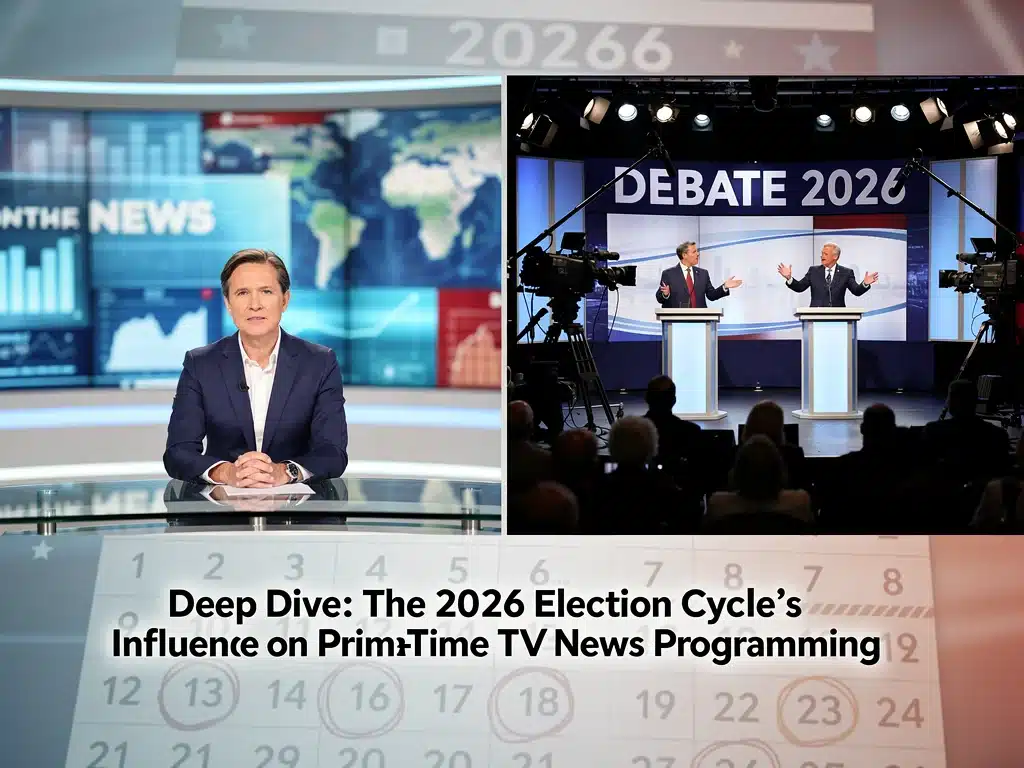
As the high-stakes race for the midterms heats up, America’s most-watched television slots are undergoing a major editorial overhaul. The intense political battlegrounds are directly reshaping prime-time TV news, shifting how major networks package information for millions of evening viewers.
Media executives and political strategists are rapidly altering broadcast strategies, pivoting away from traditional reporting toward high-drama commentary.
This analytical breakdown cuts straight to the core of these scheduling shifts and network realignments to show you who is truly controlling the narrative.
With public opinion on the line, recognizing these subtle changes in evening journalism is essential for any informed viewer. Here is how current campaign dynamics are changing the face of political broadcasting, and the key media trends you must watch next.
The Shifting Landscape of Prime-Time Political Coverage
The 2026 election cycle is rapidly altering how prime-time television news programs approach political reporting. Networks are strategically adjusting their content to capture audience interest and maintain relevance in a highly competitive environment.
This involves a re-evaluation of segment formats, guest selections, and the overall narrative framing of political events. The goal is to resonate with viewers while also positioning themselves as authoritative sources ahead of the critical election.
Early indicators suggest an increased focus on candidate profiles, policy debates, and the potential impact of legislative actions on everyday Americans. This proactive approach aims to build a foundation for deeper engagement as the election draws closer.
Increased Focus on Early Campaign Narratives
Prime-time news programs are dedicating more airtime to the nascent stages of the 2026 election campaigns. This includes exploring potential candidacies, early fundraising efforts, and the formation of political platforms.
The emphasis is on identifying emerging trends and storylines that could define the election. Analysts are frequently brought in to dissect these early narratives, offering viewers initial insights into the developing political landscape.
This heightened attention aims to cultivate viewer interest long before the primary contests begin, establishing key characters and issues in the public consciousness.
Evolution of Debate Formats and Discussions
- Networks are experimenting with new debate structures to enhance viewer engagement.
- There’s a move towards more thematic discussions rather than broad, unfocused exchanges.
- Digital integration, such as real-time polling and social media reactions, is becoming more prevalent.
The traditional town hall and panel discussion formats are being re-examined to ensure maximum impact and clarity for viewers. The objective is to make political discourse more accessible and less prone to soundbite politics.
This evolution reflects a broader effort to provide more substantive content while still maintaining the fast-paced nature of live television. The 2026 election cycle demands innovation in how political ideas are presented.
Technological Integration and Audience Engagement
The 2026 election cycle is pushing prime-time TV news to integrate advanced technologies for enhanced audience engagement. This includes leveraging data analytics, artificial intelligence, and interactive platforms to deliver news more effectively.
Networks are investing in tools that allow for real-time data visualization, enabling viewers to grasp complex political trends quickly. The aim is to make political information more dynamic and digestible for a diverse audience.
This technological push is not just about presentation; it’s also about tailoring content to viewer preferences and fostering a more interactive news consumption experience. The prime-time TV news is undeniable.
Data-Driven Storytelling and Visualization
News programs are increasingly utilizing data to inform their political narratives, translating complex statistics into compelling visual stories. This approach helps viewers understand the implications of polling numbers, economic indicators, and demographic shifts.
Infographics, interactive maps, and animated charts are becoming standard features in prime-time segments. This visual storytelling helps contextualize the 2026 election cycle’s developments, making them more relatable to the average viewer.
The precision offered by data-driven journalism strengthens the credibility of the reporting, providing factual bases for discussions on policy and political strategy.
Interactive Platforms and Viewer Participation
Live polls, social media integration, and audience Q&A sessions are becoming common features during prime-time political coverage. These interactive elements allow viewers to feel more connected to the news and to express their opinions.
Networks are using dedicated apps and online portals to gather viewer feedback and questions, which are then incorporated into live broadcasts. This two-way communication aims to foster a sense of community and direct participation in the 2026 election cycle’s discourse.
This active engagement not only boosts viewership but also provides valuable insights into public sentiment, influencing future programming decisions. The prime-time TV news is reflected in these innovations.
Editorial Strategy and Narrative Framing
The editorial strategies for prime-time TV news are undergoing significant adjustments in anticipation of the 2026 election cycle. News directors and producers are meticulously planning how to frame political stories to resonate with their target demographics.
This involves careful consideration of the language used, the experts invited for commentary, and the balance of perspectives presented. The goal is to provide comprehensive coverage while maintaining a distinct editorial voice.
The narrative framing will often emphasize the stakes of the election, highlighting potential impacts on various aspects of American life, from the economy to social policy. The prime-time TV news is central to these strategic decisions.
Balancing Objectivity and Engagement
Achieving a balance between objective reporting and engaging storytelling is a perpetual challenge for prime-time news. The 2026 election cycle intensifies this need, as viewers seek both factual information and compelling narratives.
Networks are striving to present multiple viewpoints without appearing partisan, relying on a diverse panel of analysts and commentators. This approach aims to provide a holistic understanding of the issues at hand.
The focus remains on delivering verifiable facts, while also offering thoughtful analysis that helps viewers interpret complex political developments. The prime-time TV news demands this careful balance.
Impact of Social Media Trends on Story Selection
- Trending topics on social media platforms frequently influence prime-time news agendas.
- Viral political moments are often dissected and debated on live television.
- Journalists are increasingly using social media to gauge public reaction and identify emerging stories.
The rapid dissemination of information and opinion on social media platforms means that news cycles can shift dramatically within hours. Prime-time news programs must be agile enough to respond to these changes.
This influence means that stories gaining traction online are often elevated to national prime-time discussions, reflecting the interconnectedness of traditional and digital media. The prime-time TV news is significantly shaped by these digital currents.
The Role of Punditry and Expert Analysis
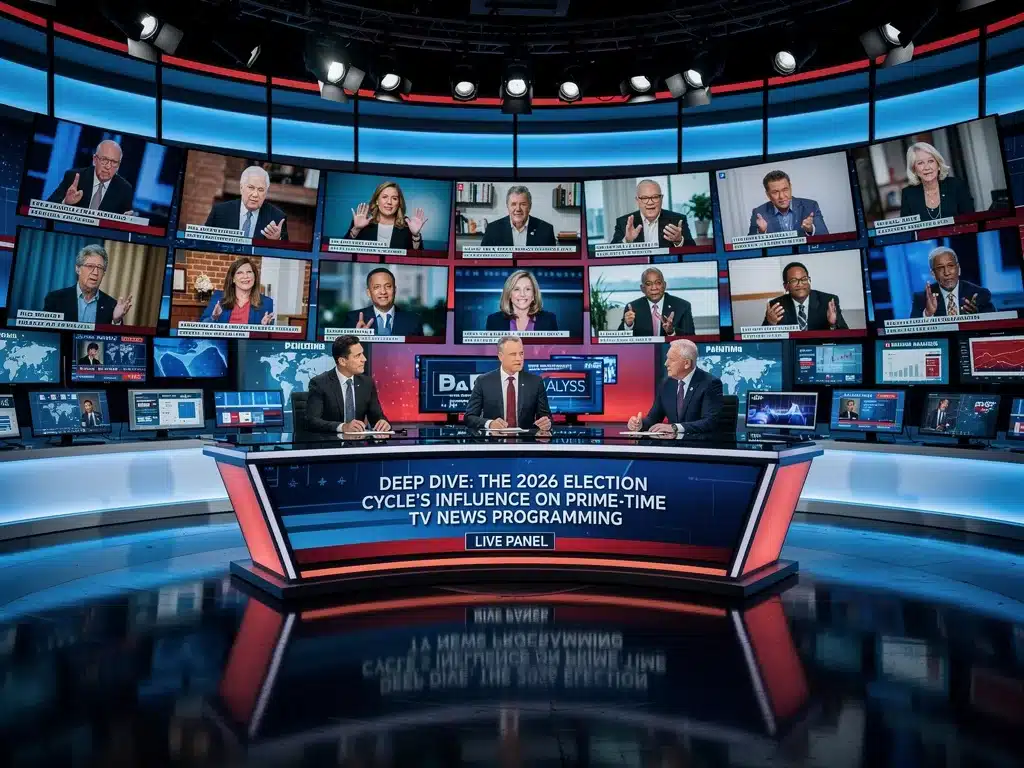
Punditry and expert analysis play an increasingly crucial role in prime-time TV news during the 2026 election cycle. Networks rely on a stable of political strategists, academics, and former officials to provide context and predictions.
These experts help decipher complex political maneuvers and public opinion trends, offering viewers deeper insights beyond surface-level reporting. Their commentary often shapes the public’s understanding of electoral dynamics.
The selection of these commentators is critical, as their perspectives can significantly influence how the 2026 election cycle is perceived. The prime-time TV news is heavily reliant on this segment.
Diverse Voices and Perspectives
To ensure comprehensive coverage, prime-time news programs are actively seeking out a more diverse range of voices for their pundit panels. This includes experts from various political affiliations, demographic backgrounds, and professional fields.
The goal is to present a multifaceted view of the 2026 election cycle, avoiding echo chambers and offering viewers a broader spectrum of analysis. This approach aims to foster more nuanced discussions.
By showcasing different perspectives, networks hope to appeal to a wider audience and provide more robust insights into the complexities of American politics.
Fact-Checking and Accountability in Commentary
With the proliferation of information, fact-checking and accountability for commentators have become paramount. Prime-time news programs are implementing stricter guidelines for guests, ensuring their claims are verifiable.
This includes on-screen fact-checks and immediate corrections when inaccuracies occur. The emphasis is on maintaining journalistic integrity amidst the often-heated rhetoric of political discourse.
The prime-time TV news requires this commitment to accuracy, especially when dealing with expert opinions that can sway public perception.
Campaign Advertising and Media Buys
The 2026 election cycle will undoubtedly see a massive influx of campaign advertising, significantly impacting prime-time TV news programming. Ad revenue from political campaigns is a major financial driver for networks.
This surge in advertising influences programming schedules, commercial breaks, and even the types of segments produced. Networks strategically position their political coverage to maximize ad placements.
The competition for prime-time ad slots will be intense, reflecting the high stakes of the upcoming election. This financial aspect is a critical component of the prime-time TV news.
Strategic Ad Placement and Viewer Experience
Networks must balance the financial benefits of political ads with maintaining a positive viewer experience. Strategic ad placement aims to integrate commercials seamlessly without alienating the audience.
This involves careful timing and grouping of political ads to avoid overwhelming viewers with partisan messages. The goal is to monetize the election cycle effectively while preserving audience loyalty.
The ad-to-content ratio is closely monitored, especially during high-profile political events and debates. This ensures that the prime-time TV news remains engaging for viewers.
Tracking Campaign Spending and Impact
- News programs often feature segments analyzing campaign spending and media buys.
- Journalists track where and how campaigns are allocating their advertising budgets.
- The effectiveness of different ad strategies is frequently debated by experts.
Understanding campaign finance and advertising strategies provides crucial context for the election. It reveals which messages campaigns prioritize and how they attempt to influence public opinion.
This analysis helps viewers understand the vast financial machinery behind modern political campaigns. The prime-time TV news involves more than just editorial content; it includes the commercial landscape.
Regulatory Environment and Media Ethics
The regulatory environment, coupled with media ethics, will significantly shape prime-time TV news programming during the 2026 election cycle. Broadcasters operate under specific regulations regarding political content and equal airtime.
Adherence to these rules is paramount, influencing everything from candidate appearances to the fairness of debate moderation. Ethical considerations also guide news organizations in their pursuit of balanced and truthful reporting.
The Federal Communications Commission (FCC) plays a critical role in overseeing these aspects, ensuring a level playing field for all political actors. This regulatory framework is a foundational element of the prime-time TV news.
Fairness Doctrine and Equal Time Rule
While the Fairness Doctrine is no longer in effect, the spirit of balanced reporting often guides ethical news organizations. The Equal Time Rule, however, remains a critical regulation for broadcasters during election cycles.
This rule requires broadcasters to offer equivalent opportunities to all legally qualified political candidates. It directly impacts how prime-time news programs schedule interviews and appearances for candidates.
Compliance with the Equal Time Rule ensures that no single candidate receives preferential treatment in terms of airtime. This is a key aspect of the prime-time TV news.
Journalistic Integrity and Bias Mitigation
Maintaining journalistic integrity and mitigating bias are constant challenges, particularly during a contentious election cycle. Newsrooms implement strict editorial policies to ensure accuracy and impartiality.
This includes rigorous fact-checking, clear separation of opinion from news, and transparent correction policies. The goal is to build and maintain viewer trust in their reporting.
Training programs for journalists often focus on identifying and reducing inherent biases in reporting, particularly when covering sensitive political topics. The prime-time TV news depends on these ethical commitments.
The Evolving Viewer Demographics
Understanding evolving viewer demographics is critical for prime-time TV news as the 2026 election cycle approaches. Younger audiences consume news differently, often preferring digital platforms over traditional television.
Networks are adapting their strategies to attract and retain these diverse demographic groups. This involves creating content that resonates with younger, digitally native viewers while also serving their traditional audience.
The challenge lies in bridging the generational gap in news consumption habits. This demographic shift is a significant factor in the prime-time TV news.
Attracting Younger Audiences to Traditional TV
Prime-time news programs are experimenting with formats and content tailored to younger viewers, such as shorter segments, more visual storytelling, and integration of pop culture references. The aim is to make political news more accessible and engaging for this demographic.
Collaborations with social media influencers and digital content creators are also being explored. This strategy seeks to draw younger audiences from online platforms to traditional television broadcasts.
The success of these efforts will be crucial for the long-term viability of prime-time news during and beyond the 2026 election cycle.
Impact of Cord-Cutting on News Consumption
- The rise of streaming services and cord-cutting significantly impacts traditional TV news viewership.
- Networks are developing robust digital presences to reach viewers who no longer subscribe to cable.
- Exclusive online content and live-streaming options are becoming standard offerings.
As more households abandon traditional cable subscriptions, news organizations must innovate to reach their audience. This means investing heavily in digital platforms and mobile-first content.
The prime-time TV news extends to how networks adapt their distribution models. The future of news consumption is increasingly digital.
Future Trends in Election Coverage
Looking ahead, several key trends will shape election coverage during the 2026 election cycle. The integration of artificial intelligence, personalized news feeds, and augmented reality are on the horizon for prime-time TV news.
These innovations promise to revolutionize how political information is gathered, presented, and consumed. Networks are actively researching and developing these technologies to stay ahead of the curve.
The future of election coverage will likely be more immersive, interactive, and tailored to individual viewer preferences. This forward-looking perspective is essential for understanding the prime-time TV news.
AI in News Gathering and Content Creation
Artificial intelligence is already being used in newsrooms for tasks such as data analysis, transcription, and even generating preliminary news reports. During the 2026 election cycle, its role will likely expand significantly.
AI tools can help journalists sift through vast amounts of information, identify emerging trends, and even detect deepfakes. This technology promises to enhance the efficiency and accuracy of political reporting.
However, ethical considerations regarding AI’s role in journalism, particularly in sensitive political contexts, remain a key discussion point. The prime-time TV news will see these tools increasingly deployed.
Personalized News Experiences
- Algorithms will increasingly tailor news content to individual viewer preferences.
- Viewers may have options to customize their news feeds based on specific topics or candidates.
- The challenge lies in balancing personalization with exposure to diverse viewpoints.
The move towards personalized news experiences aims to increase viewer engagement by delivering content that is highly relevant to each individual. This could revolutionize how people consume political information.
However, concerns about filter bubbles and echo chambers are also part of this discussion. Ensuring that personalized news still exposes viewers to a broad range of perspectives will be crucial for the health of democratic discourse. The prime-time TV news will navigate these complexities.
| Key Point | Brief Description |
|---|---|
| Editorial Shifts | Networks are adjusting content, guest selection, and narrative framing for 2026 election. |
| Tech Integration | Advanced analytics, AI, and interactive platforms enhance viewer engagement for the 2026 election cycle. |
| Ad Revenue Impact | Campaign advertising significantly influences programming schedules and financial strategies for TV news. |
| Viewer Demographics | Adapting to younger, digitally native audiences is crucial for future 2026 election coverage. |
Frequently Asked Questions About 2026 Election TV News
Prime-time TV news will introduce shorter segments, more visual storytelling, and increased social media integration. They are also exploring collaborations with digital creators to make political content more engaging and accessible to younger, digitally native viewers, reflecting the Deep Dive: The 2026 Election Cycle’s Influence on Prime-Time TV News Programming.
AI will assist in data analysis, transcription, and identifying emerging trends for the 2026 election cycle. It will also help in detecting misinformation and enhancing the efficiency of news gathering, providing deeper insights into political developments and showcasing the Deep Dive: The 2026 Election Cycle’s Influence on Prime-Time TV News Programming.
Campaign advertising will significantly increase, influencing prime-time programming schedules and commercial breaks. Networks will strategically position political coverage to maximize ad placements, reflecting the substantial financial impact of the 2026 election cycle on TV news operations and the Deep Dive: The 2026 Election Cycle’s Influence on Prime-Time TV News Programming.
Networks are committed to balancing objective reporting with engaging storytelling, adhering to regulations like the Equal Time Rule. They aim to present diverse viewpoints and maintain journalistic integrity through rigorous fact-checking and clear separation of opinion from news, crucial for the Deep Dive: The 2026 Election Cycle’s Influence on Prime-Time TV News Programming.
Future trends include personalized news experiences, further integration of augmented reality, and more immersive storytelling. These innovations aim to make political coverage more interactive and tailored to individual viewer preferences, profoundly impacting the Deep Dive: The 2026 Election Cycle’s Influence on Prime-Time TV News Programming.
Looking Ahead: The Evolving Media Landscape
The 2026 election cycle is set to profoundly transform prime-time TV news programming, demanding continuous adaptation from networks. The interplay of technological advancements, shifting demographics, and evolving political strategies will redefine how news is consumed and delivered.
Understanding these dynamics is crucial for both news consumers and media professionals as the election approaches. The future promises a more dynamic and potentially fragmented news environment, requiring vigilance and critical engagement from all stakeholders.
Monitoring how networks balance innovation with journalistic ethics will be key to assessing the impact of the prime-time TV news on democratic discourse.