Regulation Roundup: 4 Key Policy Changes Affecting TV News Content in the US by Mid-2026

The landscape of broadcast journalism is undergoing a massive shift, making it essential to understand the latest TV News Policy Changes reshaping the industry. Regulatory updates are rewriting the rules for how information is delivered to millions of American screens.
These fresh federal guidelines and media mandates are forcing networks to completely rethink their operational strategies. From updated digital distribution requirements to stricter compliance standards, these adjustments alter how information is verified and broadcasted.
Staying ahead of this shifting legal framework is no longer optional for media professionals or informed viewers. Discover the specific regulatory transitions that are redefining compliance, content creation, and the future of television journalism.
Navigating the Evolving Regulatory Landscape for TV News
The regulatory environment for television news in the United States is undergoing significant transformation, driven by technological advancements and shifting public expectations. Broadcasters and content creators must stay vigilant to adapt to these changes effectively and maintain compliance.
These evolving regulations aim to address issues ranging from misinformation and content diversity to advertising practices and consumer protection.
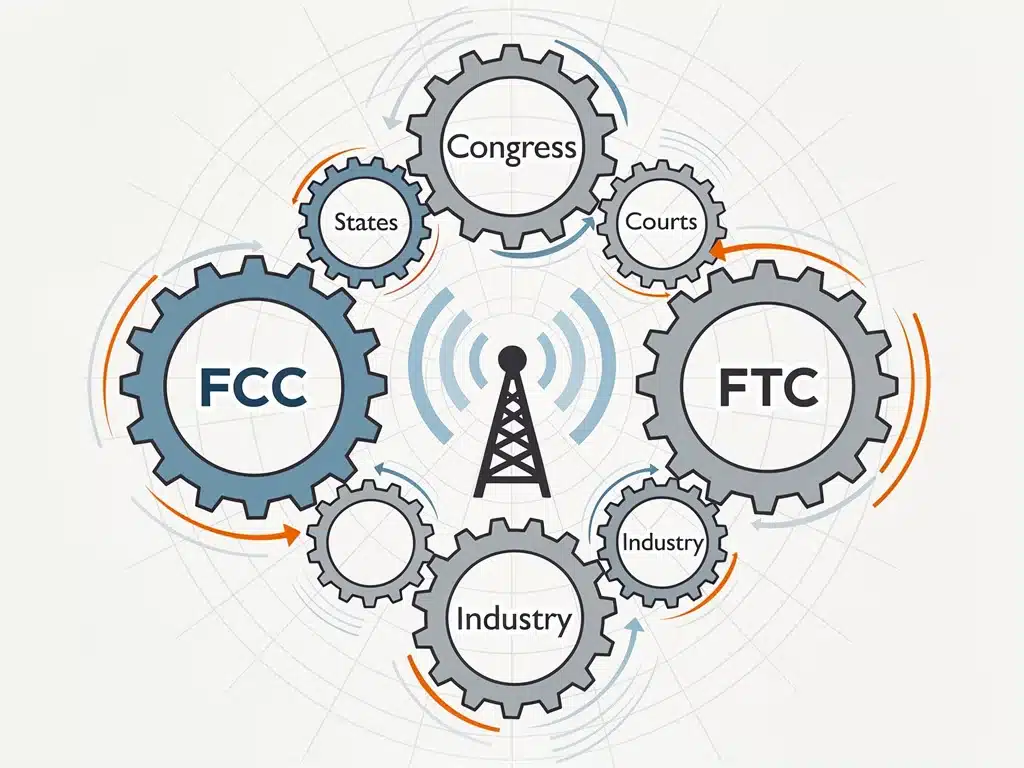
The Federal Communications Commission (FCC) and the Federal Trade Commission (FTC) are central to these efforts, alongside potential legislative actions from Congress.
The upcoming changes by mid-2026 represent a critical juncture, demanding proactive strategies from all stakeholders in the TV news sector. Understanding the nuances of each policy is paramount for navigating this complex terrain successfully.
FCC’s Renewed Focus on Localism and Content Diversity
The FCC is intensifying its focus on promoting localism in television news, aiming to ensure that communities receive relevant and diverse information. This push is intended to counteract trends of media consolidation that have sometimes led to a reduction in localized reporting.
New guidelines are expected to encourage broadcasters to invest more in local newsgathering and community-focused programming. This could include requirements for a minimum amount of locally produced content or incentives for stations that demonstrate a strong commitment to local issues.
The goal is to strengthen the connection between local news outlets and their audiences, fostering a more informed and engaged citizenry. This policy shift underscores the importance of local journalism in the democratic process.
- Increased Local Content Mandates: Stations may face stricter requirements for the percentage of their broadcast day dedicated to local news and public affairs programming.
- Support for Independent Local Outlets: Initiatives to support smaller, independent local news organizations could emerge, potentially through grants or streamlined licensing processes.
- Enhanced Public Interest Obligations: Broadcasters might see renewed emphasis on their public interest obligations, including community outreach and engagement efforts.
FTC’s Stricter Guidelines on Native Advertising and Disclosure
The FTC is preparing to implement stricter guidelines concerning native advertising and content disclosure within TV news broadcasts. This move addresses growing concerns about the blurring lines between editorial content and paid promotions, which can mislead viewers.
These new regulations will likely require clearer and more prominent disclosures when content is sponsored or appears as an advertisement, even if it mimics the style of news reporting. The aim is to ensure transparency and protect consumers from deceptive marketing practices.
Broadcasters will need to review their current practices for integrating sponsored content and make necessary adjustments to comply with these enhanced transparency requirements. The integrity of news reporting is at stake, making compliance critical.
- Clearer Disclosure Requirements: Mandatory on-screen labels or verbal disclaimers for sponsored content will become more explicit and frequent.
- Distinction Between Editorial and Commercial: Stricter rules will be enforced to maintain a clear separation between news segments and promotional material.
- Penalties for Non-Compliance: The FTC is expected to impose more significant penalties for stations failing to adhere to these new disclosure standards.
Addressing Misinformation and Promoting Journalistic Integrity
Combating misinformation and disinformation has become a paramount concern, prompting regulatory bodies to explore new approaches to uphold journalistic integrity in TV news. The widespread dissemination of false narratives poses a significant threat to public trust and informed discourse.
While direct content regulation often raises First Amendment concerns, initiatives are being considered to encourage best practices in reporting and fact-checking. These efforts aim to empower viewers to identify credible sources and critical thinking skills.
The focus is on fostering a media environment where accuracy and accountability are prioritized, without stifling legitimate journalistic inquiry. This delicate balance is at the core of upcoming policy debates regarding TV News Policy Changes.
Industry Self-Regulation and Best Practices
Many in the industry are advocating for robust self-regulatory measures as a primary means to address misinformation. This approach emphasizes the responsibility of news organizations to implement strong editorial standards and fact-checking protocols.
Professional journalism associations are developing updated codes of ethics and best practices for reporting in the digital age, which many broadcasters are expected to adopt. These guidelines cover everything from sourcing to the correction of errors.
The hope is that a strong commitment to self-regulation will demonstrate the industry’s dedication to truth and accuracy, potentially mitigating the need for more stringent government intervention. This proactive stance is vital for maintaining public trust.
The ongoing discussions around TV News Policy Changes highlight the complex interplay between journalistic freedom and public responsibility. Broadcasters are actively engaging in dialogues to shape practical and effective solutions.
Impact of Broadband Access and Digital Equity Policies
Policies aimed at expanding broadband access and promoting digital equity are increasingly recognized as having a direct impact on the consumption and distribution of TV news. As more Americans rely on digital platforms for information, ensuring equitable access becomes crucial.
Government initiatives to bridge the digital divide, such as subsidies for internet access and infrastructure development, will directly influence how news content reaches audiences. This affects both traditional broadcasters’ streaming strategies and purely digital news outlets.
These policies underscore the evolving nature of news delivery, moving beyond traditional over-the-air broadcasts to a more integrated digital ecosystem. The success of these digital equity efforts will determine the reach and impact of TV news in the coming years.
Broadband Expansion and News Accessibility
The expansion of high-speed internet to underserved areas will significantly enhance the accessibility of TV news content, particularly for streaming and on-demand services. This means a broader audience can engage with diverse news sources beyond traditional cable or satellite subscriptions.
As broadband penetration increases, news organizations are adapting their content strategies to cater to digital-first audiences. This includes developing more interactive formats, personalized news feeds, and mobile-optimized experiences.
The goal is to ensure that all Americans, regardless of their geographic location or socioeconomic status, have reliable access to timely and accurate news. This forms a crucial part of the broader TV News Policy Changes discussion.
- Increased Digital Consumption: Anticipate a rise in news consumption via streaming platforms and news apps as broadband becomes more ubiquitous.
- New Content Delivery Models: News organizations will explore innovative ways to deliver content, including partnerships with internet service providers and social media platforms.
- Focus on Digital-First Reporting: Greater emphasis will be placed on producing content specifically for digital distribution, often with shorter formats and multimedia elements.
Congressional Scrutiny of Media Ownership and Competition
Congress is expected to increase its scrutiny of media ownership and competition within the television news industry, driven by concerns over market concentration and its potential impact on viewpoint diversity. This legislative focus aims to ensure a healthy and competitive media landscape.
Debates are ongoing regarding potential revisions to media ownership rules, which could affect mergers and acquisitions in the broadcast sector. The objective is to prevent monopolies and foster a greater variety of voices in news reporting.
Any changes in ownership regulations would have profound implications for the structure of TV news organizations and the range of perspectives available to the public. This legislative activity is a key component of the TV News Policy Changes.
Potential Revisions to Cross-Ownership Rules
One area of particular interest is the potential revision of cross-ownership rules, which currently limit the ability of a single entity to own multiple types of media outlets in the same market. Relaxing or tightening these rules could dramatically reshape local media ecosystems.
Advocates for deregulation argue that current rules are outdated in the digital age and hinder broadcasters’ ability to compete effectively. Conversely, proponents of stricter rules contend that consolidation reduces journalistic independence and local accountability.
The outcome of these legislative discussions will significantly influence the competitive landscape for TV news, determining who owns what and how content is produced and distributed. This directly impacts the future of TV News Policy Changes.
- Impact on Local News Markets: Changes could lead to further consolidation or, conversely, encourage new independent players in local markets.
- Influence on Content Diversity: The structure of media ownership often correlates with the diversity of news content and editorial viewpoints available to the public.
- Antitrust Enforcement: Increased congressional attention may lead to more rigorous antitrust reviews of proposed media mergers.

Enhancing Accessibility for Viewers with Disabilities
New policies are emerging to enhance accessibility for viewers with disabilities, ensuring that TV news content is inclusive and reaches all segments of the population. These initiatives reflect a broader societal commitment to accessibility and equal access to information.
The FCC is expected to introduce updated requirements for closed captioning, audio descriptions, and other assistive technologies for broadcast and streamed news content. The goal is to remove barriers that prevent individuals with visual or hearing impairments from fully engaging with news.
Broadcasters will need to invest in and implement these accessibility features, which benefit a significant portion of the viewing public. This focus on inclusivity is a critical aspect of the TV News Policy Changes.
Technological Advancements in Accessibility
Advancements in artificial intelligence and other technologies are making it easier and more cost-effective to implement robust accessibility features. Automated captioning and AI-powered audio descriptions are becoming increasingly sophisticated.
These technological tools can assist broadcasters in meeting new regulatory requirements while also improving the overall user experience for all viewers. The integration of these solutions is becoming a standard practice in modern news production.
The push for enhanced accessibility also drives innovation in content delivery, leading to more flexible and adaptable news formats. This ensures that the message of TV News Policy Changes is universally understood.
- Improved Closed Captioning Standards: Stricter accuracy and synchronization requirements for captions will be enforced across all platforms.
- Expanded Audio Description Services: More news programs and segments will be required to offer audio descriptions for visually impaired viewers.
- User-Friendly Accessibility Features: Emphasis on making accessibility options easy to find and activate for viewers on various devices.
Ethical AI Use in News Production and Reporting
The ethical use of artificial intelligence in news production and reporting is another emerging policy area gaining traction. As AI tools become more prevalent, questions about bias, accuracy, and journalistic responsibility are coming to the forefront.
Regulatory bodies and industry groups are beginning to explore guidelines for how AI can be responsibly integrated into newsrooms, from automated content generation to data analysis. The aim is to leverage AI’s benefits while mitigating its potential pitfalls.
These discussions are crucial for maintaining public trust in news as AI technologies evolve rapidly. Establishing clear ethical frameworks for AI use is a proactive step in the broader conversation about TV News Policy Changes.
Transparency in AI-Generated Content
A key focus will be on transparency regarding the use of AI in creating or editing news content. Viewers should be aware when AI tools have been utilized, especially for tasks like writing headlines, summarizing articles, or generating visuals.
Guidelines may require clear disclosures for any content significantly produced or altered by AI, ensuring that the audience understands the origin and nature of the information. This helps to preserve the credibility of human journalists.
The development of these ethical AI guidelines is critical for the future of journalism, balancing innovation with accountability. This is a significant consideration within the upcoming TV News Policy Changes.
- Disclosure of AI Usage: Mandatory labeling for news content where AI played a significant role in its creation or modification.
- Bias Detection and Mitigation: Development of tools and processes to identify and reduce algorithmic biases in AI-generated news content.
- Human Oversight Requirements: Stipulations that human journalists must retain ultimate editorial control and responsibility for AI-assisted reporting.
Anticipating Future Policy Directions and Challenges
Beyond the immediate changes, anticipating future policy directions and challenges is essential for TV news organizations. The media landscape is dynamic, and regulatory responses often lag behind technological and societal shifts.
Areas such as deepfakes, virtual reality news, and personalized algorithmic news feeds present complex ethical and regulatory dilemmas that will require careful consideration. Proactive engagement with these emerging issues is vital.
Staying informed about ongoing research, technological developments, and public discourse will enable broadcasters to better prepare for the next wave of policy initiatives. This forward-looking perspective is crucial for long-term strategic planning.
Global Regulatory Trends and Their Influence
US policy decisions regarding TV news are not made in a vacuum; global regulatory trends often influence domestic discussions. International approaches to content moderation, data privacy, and media ethics can provide valuable insights and precedents.
Monitoring how other democratic nations are addressing similar challenges can inform and shape future US policies. Collaborative efforts on an international scale may also emerge to tackle cross-border misinformation and digital content issues.
This global perspective adds another layer of complexity to the TV News Policy Changes, requiring broadcasters to be aware of both domestic and international developments.
| Key Policy Area | Brief Description of Change |
|---|---|
| Localism & Diversity | FCC to mandate more local content, support independent outlets. |
| Native Advertising | FTC to enforce stricter disclosure rules for sponsored news content. |
| Misinformation | Industry self-regulation and best practices emphasized to combat false narratives. |
| Media Ownership | Congressional scrutiny on market concentration and cross-ownership rules. |
Frequently Asked Questions About TV News Policy Changes
The Federal Communications Commission (FCC) and the Federal Trade Commission (FTC) are the primary agencies. The FCC focuses on broadcasting and communications, while the FTC addresses advertising and consumer protection. Congressional actions also play a significant role in shaping the overarching regulatory framework for TV news.
Smaller TV news stations may see increased mandates for local content production, potentially requiring more investment in local reporting. However, there could also be new incentives or support programs from the FCC to help these stations meet updated public interest obligations and strengthen their community ties.
Broadcasters will need to implement clearer and more prominent disclosures for sponsored content to avoid misleading viewers. This includes explicit on-screen labels or verbal announcements that distinguish paid promotions from editorial news. Non-compliance could lead to significant penalties from the FTC.
While direct content regulation is complex due to free speech concerns, policies are focusing on encouraging industry self-regulation, robust fact-checking, and adherence to journalistic ethics. The aim is to foster a responsible media environment where accuracy and accountability are prioritized by news organizations themselves.
Audiences can expect more diverse and locally relevant news content, greater transparency in advertising, and improved accessibility features. Policies promoting broadband expansion will also enhance digital access, ensuring a wider reach for TV news across various platforms and demographics, shaping the future of TV News Policy Changes.
Looking Ahead: Implications for TV News
The TV News Policy Changes signals a period of significant adjustment and opportunity for broadcasters. These shifts underscore a renewed emphasis on localism, transparency, and ethical practices in a rapidly evolving media landscape.
News organizations must proactively assess their operations, from content creation to advertising strategies, to ensure full compliance and maintain public trust. The coming months will be crucial for adapting to these new mandates and shaping the future of television news in the United States.