How Strict AI Contract Provisions Halted Production on 2 Major Studio Franchises in Early 2026
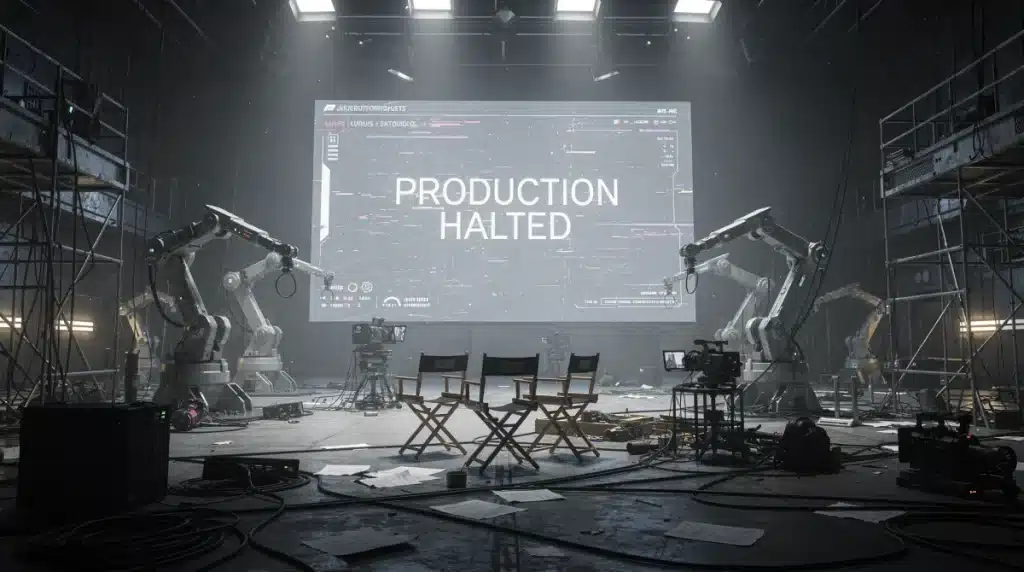
Navigating Hollywood’s rapid technological shift has brought negotiations over synthetic talent and digital likeness rights directly to a standstill. The enforcement of strict AI Contract Provisions recently halted production on two major studio franchises, highlighting growing tensions between union protections and automated filmmaking tools.
Disputes surrounding generative replication rights, voice synthesis permissions, and digital performance guardrails are disrupting traditional studio schedules.
Talent guilds and legal teams are demanding rigid contractual boundaries to prevent unauthorized digital cloning and protect human creative labor across high-budget productions.
Resolving these labor standoffs establishes critical precedents for intellectual property rights and entertainment labor contracts nationwide. Here is how ongoing studio negotiations, union mandates, and synthetic media clauses are reshaping the future of blockbuster filmmaking.
Unprecedented Halts: AI’s Grip on Hollywood Production
The entertainment industry is grappling with a significant upheaval as strict AI contract provisions have led to the complete cessation of production for two highly anticipated studio franchises in early 2026.
This development marks a pivotal moment, underscoring the escalating influence of artificial intelligence in creative endeavors and the complex legal frameworks emerging around its use.
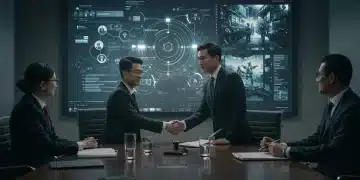
Sources close to the negotiations reveal that disagreements over AI’s role in content creation, intellectual property rights, and residual compensation for human talent proved insurmountable.
These stalemates forced studios to put multi-million dollar projects on indefinite hold, impacting thousands of jobs and casting a long shadow over future productions.
The twin halts serve as a stark warning to other studios and creative professionals about the critical need for clear, comprehensive, and mutually agreeable AI utilization policies.
The incident highlights a growing tension between technological advancement and the protection of human artistic contribution, a debate that is far from over.
The Genesis of Disruption: Why AI Contract Provisions Became a Sticking Point
The core issue revolves around differing interpretations of how AI-generated content should be credited, compensated, and controlled.
Talent unions and guilds have pushed for stringent clauses, aiming to safeguard human artists from being replaced or devalued by AI algorithms capable of generating scripts, visual effects, and even entire performances.
Studios, on the other hand, argue for greater flexibility, viewing AI as a tool to enhance efficiency and innovation, potentially reducing production costs and accelerating timelines.
This fundamental divergence in perspectives created an impasse where neither side was willing to compromise on what they considered non-negotiable terms.
The specific AI contract provisions in question included clauses on AI’s ownership of generated content, the use of actors’ likenesses for AI training without explicit consent or ongoing compensation, and guaranteed minimums for human writers and artists even when AI contributes significantly to a project.
These issues proved particularly contentious, leading directly to the production shutdowns.
Key Demands from Talent Guilds
- Guaranteed human involvement in creative processes, preventing full AI replacement.
- Clear compensation structures for any use of human likeness or work in AI training data.
- Explicit consent requirements for AI-generated content based on existing intellectual property.
The failure to find common ground reflects a broader industry struggle to adapt to rapid technological shifts. The legal frameworks governing intellectual property and labor in the digital age were not designed with advanced AI in mind, creating a vacuum that both sides are now aggressively trying to fill to their advantage.
The Ripple Effect: Economic and Creative Consequences
The immediate economic fallout from the production halts is substantial, with millions of dollars in planned expenditures now frozen.
This includes salaries for cast and crew, vendor contracts, and marketing budgets, all of which are on hold indefinitely. The local economies surrounding production hubs are also feeling the pinch, from catering services to equipment rentals.
Beyond the financial impact, the creative pipeline of these major studios has been severely disrupted. The stalled franchises represent years of development, significant creative investment, and the potential loss of audience momentum.
This unforeseen pause could force studios to re-evaluate their entire slate of upcoming projects, potentially delaying other films and series.
The incident also raises questions about creative control and artistic integrity. As AI’s capabilities advance, the lines between human and machine creativity blur, prompting a re-examination of what it means to be an artist in the digital age.
The industry watches closely to see how these strict AI contract provisions will ultimately reshape creative processes.
Impact on Industry Stakeholders
- Crew Members: Thousands of technicians, designers, and support staff face unemployment or uncertain futures.
- Investors: Shareholder confidence may waver, affecting studio stock values and future investment in the entertainment sector.
- Audiences: Fans of the stalled franchises face prolonged waits, potentially leading to disengagement or seeking alternative content.
The broader entertainment ecosystem, from streaming platforms to merchandise manufacturers, is bracing for potential long-term shifts.
The outcomes of these disputes over AI contract provisions will undoubtedly set precedents for how technology is integrated across the entire industry.
Navigating the Legal Minefield: Precedents and Future Negotiations
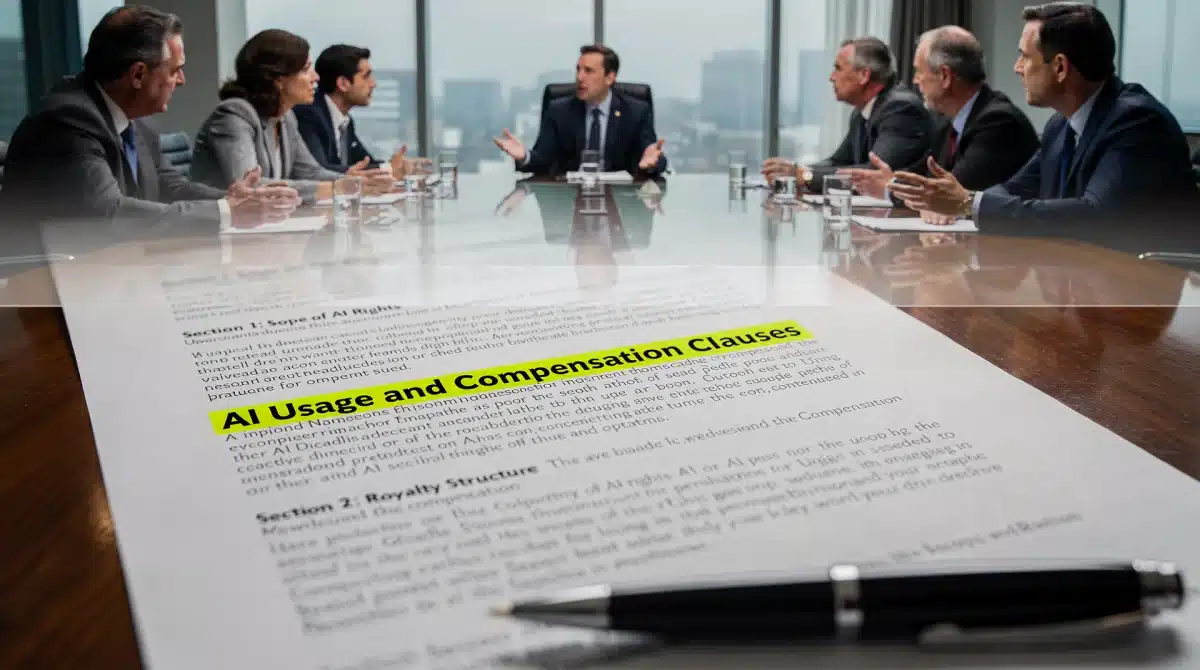
Legal experts are closely analyzing the situation, recognizing that the terms of eventual resolution will establish crucial precedents for future AI contract provisions across all creative industries.
The current impasse highlights the urgent need for new legal frameworks that can adequately address the complexities of AI-human collaboration.
The absence of clear regulatory guidelines has exacerbated the problem, leaving both studios and talent to negotiate in uncharted territory.
This lack of precedent has made it difficult to find common ground, as each side attempts to define the rules of engagement for a technology that is evolving at an unprecedented pace.
Future negotiations will likely involve a more detailed dissection of AI’s specific applications, from pre-production concept art to post-production effects and even marketing.
The goal will be to craft nuanced AI contract provisions that protect all parties while still allowing for technological innovation. This is a monumental task that requires foresight and a willingness to adapt.
The Technological Tightrope: Balancing Innovation and Protection
The dilemma faced by Hollywood is a microcosm of a larger societal challenge: how to harness the power of AI for progress without eroding fundamental human values and protections.
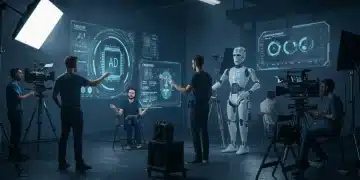
Studios are keen to leverage AI for its potential to streamline workflows, create hyper-realistic visuals, and even personalize content for audiences.
However, the ethical implications of AI, particularly concerning intellectual property, fair compensation, and the potential for job displacement, cannot be ignored.
The strict AI contract provisions demanded by talent guilds are a direct response to these concerns, aiming to establish guardrails before AI becomes an uncontrollable force.
Finding the right balance will require innovative thinking and a collaborative spirit from all stakeholders. It’s not simply about adopting new technology, but about integrating it responsibly and ethically into existing creative ecosystems.
The path forward demands thoughtful dialogue and a commitment to shared prosperity.
Lessons Learned: A Wake-Up Call for the Entertainment Industry
The halting of two major studio franchises due to strict AI contract provisions serves as a powerful wake-up call for the entire entertainment industry. It underscores the critical importance of proactively addressing technological shifts and their implications rather than reacting to crises.
Moving forward, studios and talent alike must engage in comprehensive discussions, perhaps even forming industry-wide committees, to develop standardized guidelines for AI usage.
This collaborative approach could prevent future impasses and foster a more stable environment for both innovation and creative work.
The incident also highlights the need for continuous education and adaptation. As AI technology evolves, so too must the understanding and expertise of legal professionals, producers, writers, and actors.
Staying informed about the latest advancements and their potential impacts is crucial for navigating this new landscape successfully, especially concerning AI contract provisions.
| Key Point | Brief Description |
|---|---|
| Production Halts | Two major studio franchises stopped due to AI contract disputes in early 2026. |
| Core Disagreement | Disputes over AI ownership, compensation for human likeness, and creative control. |
| Economic Impact | Millions in frozen budgets, job losses, and disrupted creative pipelines. |
| Future Outlook | Calls for new legal frameworks and industry-wide collaboration on AI guidelines. |
Frequently Asked Questions About AI Contract Provisions
The halts were caused by unresolved disputes over strict AI contract provisions concerning intellectual property rights, compensation for human talent when AI is used, and the extent of AI’s role in creative processes. Both studios and talent guilds reached an impasse, leading to the immediate cessation of work on two major franchises.
While specific franchise names have not been publicly disclosed due to ongoing legal sensitivities, reports indicate they are two high-profile projects from major studios. These franchises represent significant investments and were highly anticipated by global audiences, making their suspension particularly impactful for the industry and fans.
The immediate consequences include significant financial losses, job disruptions for thousands of crew members and artists, and a major blow to the creative pipelines of the affected studios. It also creates a climate of uncertainty for other productions currently negotiating or planning to integrate AI into their workflows, highlighting the complex nature of AI contract provisions.
These strict AI contract provisions are unprecedented in their scope and detail, specifically addressing advanced AI’s capabilities in content generation and likeness replication. Previous agreements lacked such granular clauses, as AI technology had not reached its current level of sophistication. The new demands aim to protect human artists from potential displacement by AI.
Long-term implications include a likely redefinition of creative labor, new legal precedents for intellectual property in the age of AI, and a shift towards more robust AI contract provisions in future negotiations. The industry will need to establish clearer ethical guidelines and compensation models to integrate AI responsibly and sustainably into production processes.
Looking Ahead
The halting of two major studio franchises due to strict AI contract provisions is not merely an isolated incident but a powerful harbinger of the challenges and transformations ahead for the entertainment industry.
This event underscores the urgent need for a cohesive, industry-wide strategy to integrate artificial intelligence ethically and equitably.
Stakeholders must now move beyond adversarial negotiations to forge comprehensive frameworks that balance innovation with the protection of human creativity and livelihood.
The coming months will be crucial as the industry grapples with establishing new norms that will define the future of filmmaking in an AI-driven world.
The resolution of these disputes will set a global benchmark for how creative industries navigate technological advancement while upholding artistic integrity and fair labor practices.