AI in Film: Revolutionizing Production Budgets by 10% in 2026
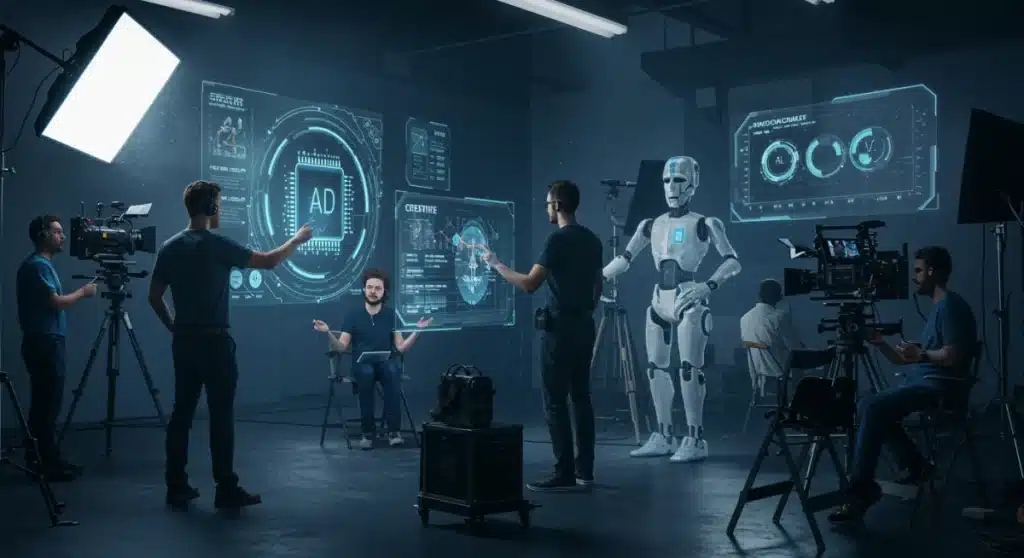
By 2026, new AI technologies are set to significantly impact film development and production, potentially reducing overall budgets by 10% through enhanced efficiency across various stages.
The film industry, a realm of boundless creativity and significant financial investment, is on the cusp of a profound transformation. In 2026, the influence of new AI technologies is projected to redefine how movies are made, particularly impacting budgets. We’re looking at a future where AI film production budgets could see a reduction of up to 10%, streamlining processes from the initial script to the final screen. This shift promises not only cost savings but also unprecedented creative possibilities.
The Dawn of AI in Script Development and Pre-production
The journey of any film begins with a story, and AI is already making its mark on script development. By 2026, advanced AI algorithms will be instrumental in analyzing market trends, audience preferences, and even generating initial story concepts or refining existing scripts for maximum impact. This early integration can significantly reduce the time and resources traditionally spent in the conceptualization phase.
Pre-production, a meticulous stage involving planning, casting, and location scouting, also stands to benefit immensely from AI. Tools capable of rapid analysis and prediction can optimize these processes, ensuring that resources are allocated efficiently and potential roadblocks are identified early. This proactive approach is a cornerstone of budget reduction.
AI-powered Script Analysis and Enhancement
AI can dissect screenplays to identify narrative patterns, character arcs, and dialogue effectiveness. This analytical power helps writers and producers make data-driven decisions, improving story quality and market appeal. It can even suggest alternative plot lines or character developments that resonate more deeply with target audiences.
- Identify plot holes and inconsistencies.
- Predict audience reception and potential box office success.
- Optimize dialogue for emotional impact and pacing.
- Generate character profiles and backstories.
Virtual Location Scouting and Set Design
Imagine scouting hundreds of locations or designing intricate sets without leaving the office. AI-powered virtual reality and generative design tools are making this a reality. These technologies allow filmmakers to visualize scenes and environments with incredible detail, reducing the need for costly physical scouting trips and extensive set construction revisions.
In conclusion, the early stages of film production, from ideation to pre-visualization, are being revolutionized by AI. These technologies are not just tools for efficiency; they are catalysts for innovation, enabling filmmakers to explore creative avenues while maintaining a keen eye on their budgets. The impact at this foundational level sets the stage for downstream savings.
Optimizing Production Logistics with AI
Once the script is finalized and pre-production is complete, the actual filming process begins, often the most resource-intensive phase. AI is poised to streamline production logistics, from scheduling and resource allocation to talent management, thereby directly influencing the overall film budget. The complexity of coordinating hundreds of cast and crew members, along with equipment and locations, presents a perfect challenge for AI-driven solutions.
By leveraging predictive analytics and machine learning, production teams can anticipate potential delays, optimize shooting schedules, and manage equipment inventory with unparalleled precision. This efficiency translates directly into fewer reshoots, reduced idle time, and ultimately, a more cost-effective production.
Intelligent Scheduling and Resource Allocation
AI algorithms can process vast amounts of data, including actor availability, weather forecasts, location permits, and equipment maintenance schedules, to generate optimal shooting plans. This minimizes conflicts and maximizes the utilization of all resources, preventing costly last-minute changes.
- Dynamic scheduling adjustments based on real-time data.
- Automated equipment tracking and maintenance alerts.
- Optimized crew assignments to prevent overtime.
- Predictive analysis for potential logistical bottlenecks.
AI in Talent Management and Performance Enhancement
Beyond logistics, AI is also finding applications in talent management. From assisting in casting decisions based on performance data and audience appeal to even providing real-time feedback during takes, AI tools can help extract the best from actors and technical staff. This contributes to a smoother production flow and reduces the need for extensive retakes.
In summary, AI’s role in optimizing production logistics is about injecting intelligence and foresight into every operational decision. By automating complex scheduling, managing resources efficiently, and even aiding in performance, AI helps to chip away at the significant costs typically associated with the main production phase, contributing to the projected 10% budget reduction.
The Impact of AI on Post-Production and Visual Effects
Post-production, encompassing editing, sound design, and visual effects (VFX), is often where a significant portion of a film’s budget is spent, especially for blockbusters. New AI technologies are revolutionizing this phase, offering accelerated workflows, enhanced creative capabilities, and substantial cost savings. The intricate nature of VFX, in particular, makes it ripe for AI-driven efficiencies.
By 2026, AI will be an indispensable tool for tasks ranging from automated color grading and audio mastering to generating complex visual effects elements. This not only speeds up the post-production pipeline but also allows artists to focus on higher-level creative decisions rather than repetitive, time-consuming tasks. The ability to iterate quickly and precisely leads to better final products for less.
Automated Editing and Color Grading
AI-powered editing software can analyze footage and suggest optimal cuts, pacing, and transitions based on narrative flow and emotional impact. Similarly, AI can automatically adjust color palettes to match desired moods or continuity across scenes, drastically reducing manual labor.
- Faster first cuts and rough assemblies.
- Consistent color grading across entire films.
- Automated audio clean-up and mixing.
- Identification of best takes for seamless editing.
Generative AI for Visual Effects
Generative AI is a game-changer for VFX. Instead of artists meticulously creating every element, AI can generate realistic environments, creatures, and effects from simple prompts or existing data. This can dramatically cut down on the person-hours required for complex CGI scenes, making ambitious visual spectacles more accessible even on tighter budgets.
In conclusion, AI’s influence in post-production is transformative. It’s not just about making existing processes faster; it’s about enabling new creative possibilities that were previously prohibitively expensive. The efficiencies gained in this stage are critical contributors to the overall goal of reducing film production budgets by 10%.
AI-Driven Marketing and Distribution Strategies
The journey of a film doesn’t end when it’s completed; it needs to reach its audience. AI is increasingly vital in refining marketing and distribution strategies, ensuring that films connect with their target demographics effectively and efficiently. This intelligent approach minimizes wasted marketing spend and maximizes audience engagement, indirectly contributing to the financial success and recouping of production costs.
By analyzing vast datasets of consumer behavior, social media trends, and past film performance, AI can pinpoint the most effective marketing channels, tailor promotional content for different audience segments, and even predict optimal release windows. This data-driven approach replaces traditional guesswork with precision targeting.
Personalized Marketing Campaigns
AI allows studios to create highly personalized marketing campaigns, delivering specific trailers, posters, and advertisements to individuals most likely to be interested in a particular film. This level of customization improves conversion rates and reduces overall marketing expenditure.
- Targeting specific demographics with tailored content.
- Optimizing ad placement across various platforms.
- Predicting audience engagement with different marketing materials.
- Identifying influencers and communities for promotion.
Optimizing Distribution and Release Strategies
AI can also inform distribution decisions, such as determining the best theatrical release dates, identifying optimal streaming platforms, and even predicting international market performance. This strategic insight ensures that films are launched in a way that maximizes their reach and revenue potential.
To summarize, AI’s role in marketing and distribution is about smart outreach. By understanding and predicting audience behavior, AI helps studios spend their marketing dollars more wisely and ensures films find their intended viewers. This optimization is an integral part of the holistic approach to influencing film development and production budgets by 10%.
Ethical Considerations and the Human Element in AI Film Production
While the economic and efficiency benefits of AI in film production are compelling, it’s crucial to address the ethical considerations and the enduring role of human creativity. The integration of AI raises questions about job displacement, intellectual property, and the very definition of creative authorship. Striking a balance between technological advancement and human ingenuity is paramount for the sustainable growth of the industry.
Filmmaking is inherently a human endeavor, driven by emotion, intuition, and unique perspectives. AI should be viewed as an augmentative tool, enhancing creative processes rather than replacing them entirely. The challenge for 2026 and beyond will be to harness AI’s power responsibly, ensuring that it serves to enrich storytelling and filmmaking, not diminish its human core.
Addressing Job Displacement Concerns
The rise of AI naturally sparks fears of job losses, particularly in roles involving repetitive or data-intensive tasks. However, history shows that technological shifts often create new roles and demand new skill sets. The film industry must adapt by investing in training and upskilling programs for its workforce, transforming roles rather than eliminating them.
- Focus on AI as a co-creative partner, not a replacement.
- Develop training programs for AI-assisted filmmaking.
- Emphasize roles requiring critical thinking and emotional intelligence.
- Explore new job categories created by AI integration.
Maintaining Creative Control and Originality
Who owns the copyright when an AI generates a script or a visual effect? How do we ensure that AI-generated content maintains originality and avoids algorithmic homogeny? These are complex questions that require careful consideration and the development of new legal and ethical frameworks.
In conclusion, the successful integration of AI into film production, while aiming for a 10% budget reduction, hinges on a thoughtful and ethical approach. It requires a commitment to preserving the human element of storytelling, addressing workforce concerns, and establishing clear guidelines for creative ownership. AI should be a tool that empowers human artists, not overshadows them.
Future Projections: Beyond 2026 and Further Budget Reductions
Looking beyond 2026, the trajectory of AI in film development and production suggests even more profound changes and potentially greater budget efficiencies. The initial 10% reduction is likely just the beginning, as AI technologies continue to mature and become more seamlessly integrated into every facet of the filmmaking process. We can anticipate an era of hyper-personalized content, virtual studios, and predictive insights that further refine and redefine the economics of cinema.
The future will see AI not just assisting but potentially orchestrating entire production pipelines, from initial concept to global distribution, with minimal human intervention in routine tasks. This evolution will free up human talent to focus exclusively on innovative storytelling and artistic direction, pushing the boundaries of what’s possible on screen.
Hyper-Personalized Content Creation
Imagine films tailored dynamically to individual viewer preferences, or even interactive narratives where AI adapts the storyline based on audience choices. This level of personalization could unlock new revenue streams and revolutionize how content is consumed, making each viewing a unique experience.
- AI-driven interactive storytelling.
- Dynamic content generation based on viewer data.
- New monetization models for personalized experiences.
- Enhanced audience engagement through tailored narratives.
The Rise of Virtual Studios and Autonomous Production
The concept of a virtual studio, where much of the production and post-production occurs in digital environments with AI managing assets and workflows, will become more prevalent. Autonomous drones for cinematography, AI directors for specific scenes, and intelligent project management systems could further drive down costs and increase production speed.
In conclusion, the journey of AI in film production is an ongoing evolution, with 2026 marking a significant milestone in achieving a 10% budget reduction. The future promises even more innovative applications, leading to potentially greater efficiencies and a re-imagined landscape for cinematic creation. The synergy between human creativity and advanced AI will define the next generation of filmmaking.
| Key Impact Area | Brief Description of AI’s Influence |
|---|---|
| Script Development | AI analyzes trends, refines narratives, and generates concepts, streamlining early creative stages. |
| Production Logistics | Optimizes scheduling, resource allocation, and talent management, reducing operational costs. |
| Post-Production & VFX | Automates editing, color grading, and generates complex visual effects, saving significant time and money. |
| Marketing & Distribution | Personalizes campaigns and optimizes release strategies for maximum reach and revenue. |
Frequently Asked Questions About AI in Film
AI will reduce film budgets by 10% through efficiencies in script analysis, optimized production scheduling, automated post-production tasks like editing and VFX generation, and highly targeted marketing. These cumulative savings across all stages contribute to the overall budget reduction.
Key AI technologies include natural language processing for script analysis, machine learning for predictive analytics in scheduling, generative AI for visual effects and virtual environments, and advanced algorithms for personalized marketing and distribution optimization.
While AI will automate routine tasks, it’s more likely to augment human creativity rather than replace it entirely. New roles focused on AI integration, data analysis, and ethical oversight are expected to emerge, requiring upskilling of the workforce.
AI enhances the creative process by providing data-driven insights, generating initial concepts, and automating tedious tasks, allowing filmmakers to focus more on artistic vision and complex storytelling. It can also unlock new creative possibilities previously constrained by budget or time.
Ethical challenges include intellectual property rights for AI-generated content, potential job displacement, maintaining creative originality, and preventing algorithmic bias in storytelling. These issues require careful consideration and regulatory frameworks to ensure responsible adoption.
Conclusion
The film industry stands at an exciting precipice, with AI technologies poised to reshape its very foundations. By 2026, the projected 10% reduction in film development and production budgets due to AI is not merely a cost-saving measure but a testament to a more efficient, innovative, and data-driven future. From the initial spark of a script to the final marketing push, AI offers tools that streamline processes, enhance creative output, and optimize resource allocation. While challenges around ethics and the human role remain, the overall trajectory points towards a future where technology empowers filmmakers to tell more compelling stories, more efficiently, and to a wider audience than ever before.