Comparing 2026’s Top Streaming Device Interfaces: A Deep Dive into User Experience and 3 Key Efficiency Metrics
If you spend more time endlessly scrolling through menus than actually watching movies, evaluating 2026 streaming interfaces is the key to reclaiming your screen time. Today’s smart TV operating systems are shifting from cluttered ad grids to lightning-fast, hyper-personalized hubs.
The battle for your living room now hinges on system speed, navigation fluidness, and smart content discovery. Modern media hubs must load media instantly and eliminate friction, ensuring you find your next watch in seconds rather than minutes.
Whether you favor Roku, Google TV, Apple TV, or Fire TV, benchmarking operational performance is vital before your next upgrade. Read on for a deep dive into user experience benchmarks and the key speed metrics redefining home entertainment.
The Evolving Landscape of Streaming Interfaces in 2026
The year 2026 marks a pivotal moment for streaming device interfaces, as technological advancements and consumer demands drive significant innovation. Platforms are increasingly prioritizing intuitive design and efficient navigation to retain and attract users in a highly competitive market.
This evolution is not merely aesthetic; it deeply impacts how users interact with content, from discovery to playback. Understanding these shifts is crucial for both consumers choosing devices and developers aiming to optimize their offerings.
Our deep dive into 2026 streaming interfaces will explore the core aspects of user experience and the critical metrics defining success in this dynamic environment, providing factual and up-to-date information.
User Experience: The Core of Streaming Engagement
User experience (UX) remains the paramount factor determining the success of any streaming interface. In 2026, UX encompasses not only visual appeal but also the seamlessness of content discovery, personalization, and overall interaction fluency across various devices.
Leading platforms are investing heavily in AI-driven personalization, predictive content suggestions, and voice command integration to enhance the user journey. The goal is to minimize friction and maximize engagement, ensuring users spend more time consuming content and less time navigating menus.
A superior user experience directly correlates with subscriber retention and platform loyalty, making it a central battleground in the ongoing competition among streaming giants. This focus on UX is a defining characteristic of 2026 streaming interfaces.
Intuitive Navigation and Content Discovery
The ability to find desired content quickly and effortlessly is a cornerstone of effective streaming interfaces. In 2026, advanced search algorithms and personalized recommendations are setting new benchmarks for content discovery.
Users expect their platforms to anticipate their preferences and present a curated selection of shows and movies. This goes beyond simple genre filtering, incorporating viewing history, ratings, and even mood-based suggestions to refine the discovery process.
- Personalized content recommendations driven by AI.
- Advanced voice search capabilities for natural language queries.
- Contextual content grouping for easier browsing.
- Seamless integration of watchlists and continue-watching features.
Accessibility and Inclusivity in Design
As streaming becomes ubiquitous, ensuring interfaces are accessible to all users, regardless of ability, is a growing priority. In 2026, accessibility features are no longer an afterthought but an integral part of the design process.
This includes robust support for screen readers, high-contrast modes, customizable text sizes, and improved subtitle/caption options. Platforms recognizing this need are gaining a significant edge in user satisfaction and market reach.
The commitment to inclusivity reflects a broader understanding that a truly great user experience is one that serves everyone effectively, reinforcing the importance of thoughtful design in 2026 streaming interfaces.
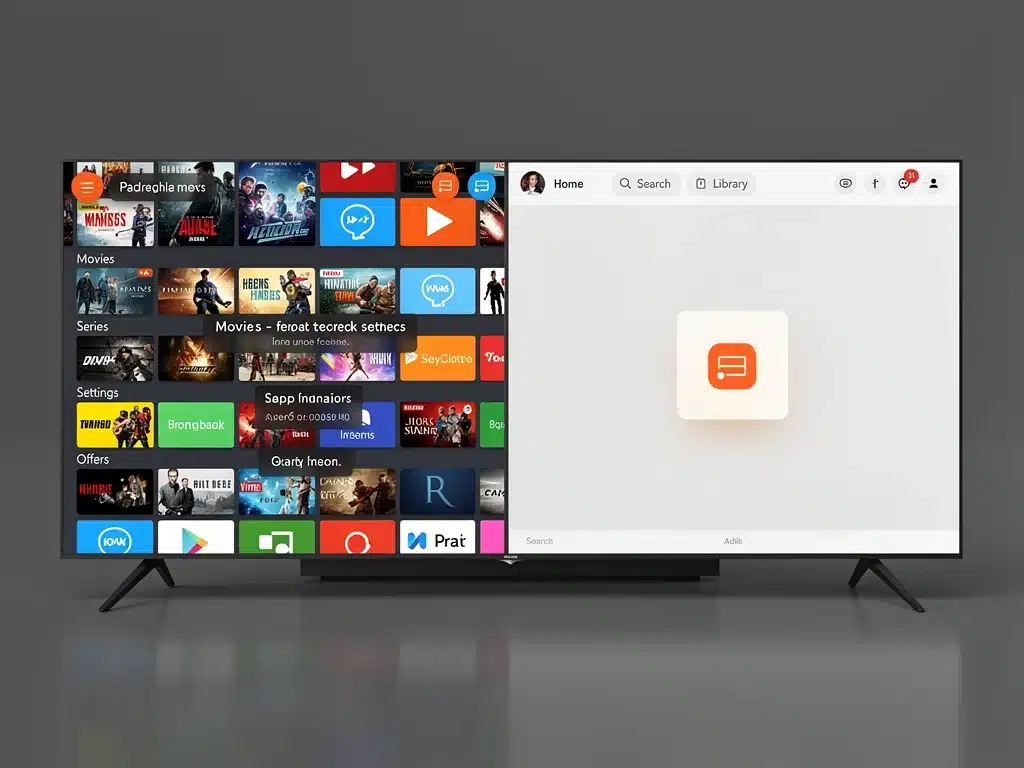
Key Efficiency Metric 1: Load Times and Responsiveness
In the fast-paced digital world, slow load times are a major deterrent for users. The first critical efficiency metric for 2026 streaming interfaces is the speed at which the interface loads and responds to user input.
This metric measures not only the initial boot-up time of the device but also the responsiveness when navigating between menus, launching applications, and starting video playback. A delay of even a few seconds can lead to user frustration and abandonment.
Industry benchmarks for 2026 indicate a strong emphasis on sub-second response times for core navigational elements. Optimizing code, leveraging edge computing, and improving server infrastructure are key strategies employed by top platforms to achieve this.
Optimizing Interface Boot-Up and App Launch
The initial impression a user gets from a streaming device often comes from its boot-up speed. In 2026, devices are expected to power on and present a fully functional interface in mere seconds, a stark contrast to earlier generations.
Similarly, launching individual streaming applications within the interface must be instantaneous. This requires efficient resource allocation and streamlined app architectures, minimizing splash screens and loading indicators.
- Sub-second app launch times.
- Rapid interface rendering upon device activation.
- Efficient background process management.
- Optimized caching mechanisms for frequently accessed content.
Key Efficiency Metric 2: Navigation Speed and Input Lag
The second crucial efficiency metric for 2026 streaming interfaces is navigation speed and the absence of input lag. This refers to how quickly the interface responds to remote control commands, touchscreen gestures, or voice inputs.
A fluid and lag-free navigation experience is essential for user satisfaction. Any noticeable delay between pressing a button or speaking a command and the corresponding on-screen action can severely degrade the user experience, leading to feelings of frustration.
Advanced processors, optimized operating systems, and improved wireless communication protocols are all contributing to virtually eliminating input lag in leading 2026 devices. This responsiveness creates a more natural and enjoyable interaction.
Seamless Transitions and Menu Responsiveness
Smooth transitions between different sections of the interface, such as moving from the home screen to a specific show’s detail page, are vital. Jerky or slow animations disrupt the flow and make the interface feel less premium.
Menu responsiveness also extends to scrolling through long lists of content or settings. Users expect instantaneous feedback as they navigate, with content loading dynamically and without visual hitches.
- Instantaneous feedback to remote control commands.
- Fluid animations and transitions between UI elements.
- Responsive scrolling through extensive content libraries.
- Minimal latency in voice command processing.
Key Efficiency Metric 3: Content Discovery Rate
The third key efficiency metric, content discovery rate, quantifies how effectively an interface helps users find new and engaging content. In 2026, this metric is increasingly sophisticated, moving beyond simple click-through rates.
It measures the percentage of users who interact with recommended content or utilize search functions to find something new, ultimately leading to playback. A high content discovery rate indicates a well-designed recommendation engine and intuitive search tools.
Platforms are employing machine learning to analyze user behavior patterns, identifying optimal times and formats for presenting new content. The goal is to broaden user engagement and reduce decision fatigue, ensuring users always have something compelling to watch within the 2026 streaming interfaces.
Measuring Recommendation Engine Effectiveness
The effectiveness of a platform’s recommendation engine is central to its content discovery rate. This involves tracking how often users watch content suggested by the algorithm versus content they actively search for or browse.
A successful recommendation engine not only introduces users to new titles they enjoy but also helps them explore diverse genres they might not have considered otherwise. This expands their viewing habits and deepens their engagement with the platform.
The continuous refinement of these algorithms, based on real-time user feedback and viewing data, is a cornerstone of improving content discovery within 2026 streaming interfaces, according to industry analysts.
The Role of AI and Personalization in 2026 Interfaces
Artificial intelligence and advanced personalization are no longer supplementary features but fundamental components of 2026 streaming interfaces. These technologies are revolutionizing how users interact with content, creating highly tailored experiences.
AI algorithms analyze vast amounts of data, including viewing history, search queries, and even emotional responses to content, to predict user preferences with remarkable accuracy. This allows interfaces to dynamically adapt, presenting content that is most relevant to each individual.
From personalized home screens to contextual advertising, AI is making streaming more intuitive and engaging. This shift from generic content presentation to hyper-individualized experiences is a defining trend for 2026 streaming interfaces.
Predictive Content Suggestions and Dynamic Layouts
Predictive content suggestions leverage AI to anticipate what users might want to watch next, often before they even realize it themselves. These suggestions can appear directly on the home screen, within search results, or even during playback.
Dynamic layouts further enhance personalization by rearranging the interface elements based on user behavior and time of day. For example, a user who frequently watches news in the morning might see news headlines prominently displayed upon waking up.
- AI-driven predictions for next-watch recommendations.
- Interface layouts that adapt to user habits and preferences.
- Contextual content surfacing based on real-time trends.
- Integration of external data for more accurate personalization.
Challenges and Future Outlook for Streaming Interfaces
Despite rapid advancements, 2026 streaming interfaces face ongoing challenges. Fragmentation across various platforms, the need for universal search capabilities, and ensuring data privacy remain critical areas for development and improvement.
As the number of streaming services continues to grow, users often struggle with managing multiple subscriptions and finding content across disparate platforms. The demand for integrated, unified search experiences is becoming increasingly vocal.
Looking ahead, the future of streaming interfaces will likely involve even greater integration, potentially blurring the lines between different services and devices. The focus will remain on creating a seamless, effortless, and highly personalized entertainment ecosystem.
Addressing Fragmentation and Interoperability
The current landscape of numerous, often siloed, streaming services presents a significant challenge to user experience. Finding a specific show or movie often requires checking multiple apps, a process that can be tedious and frustrating.
In response, some 2026 streaming interfaces are exploring deeper interoperability, allowing for universal search and unified watchlists across different platforms. This could involve partnerships between services or the development of super-aggregators that streamline the entire streaming experience.
While technical and commercial hurdles remain, the drive towards a more consolidated and user-friendly content discovery environment is strong, promising a more harmonious future for streaming consumers.
| Key Aspect | Description |
|---|---|
| User Experience (UX) | Focus on intuitive design, personalization, and seamless content discovery. |
| Load Times & Responsiveness | Sub-second interface and app loading, critical for user retention. |
| Navigation Speed & Lag | Fluid interaction with minimal input delay across all controls. |
| Content Discovery Rate | Effectiveness of AI recommendations and search in finding new content. |
Frequently Asked Questions About 2026 Streaming Interfaces
A good user experience in 2026 streaming interfaces is defined by intuitive navigation, hyper-personalization, minimal friction in content discovery, and robust accessibility features. It ensures users spend less time searching and more time enjoying content, leading to higher satisfaction and retention.
Load times and responsiveness are critical because users expect instant gratification. Delays in interface loading or app launches lead to frustration and platform abandonment. Sub-second response times are now a benchmark, reflecting advanced hardware and software optimization in 2026 streaming interfaces.
The content discovery rate directly impacts platform success by measuring how effectively users find new, engaging content. A high rate signifies effective recommendation engines and search tools, which increase overall viewing time and user loyalty, crucial for the competitive 2026 streaming interfaces market.
AI plays a transformative role by enabling hyper-personalization, predictive content suggestions, and dynamic interface layouts. It analyzes user data to anticipate preferences, making the streaming experience more intuitive and tailored, which is a hallmark of advanced 2026 streaming interfaces.
The main challenges facing 2026 streaming interfaces include fragmentation across numerous platforms, the need for universal content search capabilities, and ensuring robust data privacy. Overcoming these hurdles will define the next phase of innovation and user satisfaction in the streaming industry.
Looking Ahead: The Future of Streaming Interaction
The analysis of 2026 streaming interfaces clearly indicates a future driven by hyper-personalization, efficiency, and seamless user interaction. The metrics of load times, navigation speed, and content discovery rate will continue to be paramount for platform success.
Consumers can anticipate increasingly sophisticated and intuitive experiences, with AI playing an even larger role in tailoring content to individual preferences. The industry’s focus on accessibility and interoperability also promises a more inclusive and less fragmented streaming landscape.
As technology evolves, the benchmark for a superior streaming interface will continuously rise, pushing developers to innovate further in their quest to capture and retain the attention of a global audience, making 2026 streaming interfaces a critical area of ongoing development.