Decoding 2026’s Audio Codecs for Streaming: How to Get the Best Sound Quality from Your Existing Setup with 4 Simple Steps
Are you tired of compressed, lifeless music dulling your wireless listening experience? Decoding 2026’s Audio Codecs reveals how advanced compression technologies like LC3, LC3plus, and high-bitrate Opus are revolutionizing wireless sound.
Understanding how these updated digital algorithms process sound allows you to unlock studio-grade fidelity across your current hardware setup.
The shift toward low-latency Bluetooth LE Audio and adaptive loss-free compression eliminates typical wireless bottlenecks without requiring expensive equipment upgrades. By optimizing bitrate settings and selecting appropriate audio formats, you preserve dynamic range and spatial detail.
Fine-tuning your media players and device playback settings ensures maximum acoustic clarity from your streaming subscriptions. Following four simple calibration steps bridges the gap between raw digital signals and high-definition wireless playback.
Decoding 2026’s Audio Codecs: The New Frontier of Sound
The year 2026 is poised to be a pivotal moment for audio technology, particularly in the realm of streaming. New codecs are emerging that promise not just higher fidelity, but also greater efficiency, enabling better sound even with limited bandwidth.
These innovations are driven by a demand for more immersive and lifelike audio experiences across all platforms. From music services to video streaming, the push is towards delivering studio-quality sound directly to your ears, regardless of your device.
Understanding these new formats is the first step in enhancing your streaming experience, moving beyond the limitations of older technologies. The focus is on clarity, spatial audio, and dynamic range, all compressed intelligently.
The Rise of Lossless and Immersive Formats
Lossless codecs like FLAC and ALAC have long been the gold standard for audiophiles, preserving every detail of the original recording. However, their bandwidth demands limited their widespread adoption in streaming.
Newer codecs, such as the evolving MPEG-H 3D Audio and enhanced versions of LC3, aim to bridge this gap, offering near-lossless quality at significantly lower bitrates. This means more detail and depth without buffering issues, revolutionizing how we perceive streamed audio.
These formats are not just about higher resolution; they introduce spatial audio capabilities, allowing sound engineers to place individual sounds in a three-dimensional space around the listener. This creates a much more engaging and realistic soundstage.
- MPEG-H 3D Audio: Offers channel-agnostic, object-based audio for immersive experiences.
- Enhanced LC3: Provides high-quality audio at very low bitrates, ideal for wireless devices.
- Opus: A versatile codec gaining traction for its balance of quality and efficiency across various applications.
Advanced Compression and AI Integration
The evolution of audio codecs is increasingly intertwined with advanced compression algorithms and artificial intelligence. These technologies enable more intelligent encoding, where the codec can dynamically adjust to the content and network conditions.
AI-driven processing can identify and prioritize critical audio elements, ensuring that vocals and instruments retain their clarity even under challenging streaming conditions. This adaptive approach leads to a more consistent and higher-quality listening experience.
Furthermore, these smart codecs are designed to be more energy-efficient, extending battery life for mobile devices while maintaining superior sound. The integration of AI marks a significant leap forward in audio delivery.
Assessing Your Current Setup for Optimal Streaming Audio
Before diving into new technologies, it’s essential to understand the capabilities and limitations of your existing audio equipment. Many current setups can be significantly improved with minor adjustments or targeted upgrades.
This assessment involves evaluating your playback devices, amplifiers, speakers, and even your network infrastructure. Each component plays a vital role in the final sound quality you experience when streaming.
Identifying bottlenecks in your current chain will guide your efforts in improving your audio, ensuring that any changes you make yield tangible benefits. A holistic view is key to unlocking better sound.
Evaluating Your Streaming Device and Software
Your streaming device, whether it’s a smart TV, dedicated streamer, or computer, is the first link in the audio chain. Its internal DAC (Digital-to-Analog Converter) and processing power significantly influence the quality of the decoded audio.
Ensure your device is capable of supporting the latest high-resolution and immersive audio codecs. Software updates are often crucial for enabling these capabilities, so keep your device’s firmware current.
Consider the streaming applications you use. Many services now offer high-fidelity tiers, but you need to activate these settings and ensure your device can handle the increased data flow for Decoding 2026’s Audio Codecs for Streaming.
- Check device specifications for supported audio codecs and sample rates.
- Update streaming apps and device firmware regularly.
- Verify high-fidelity settings are enabled within your preferred streaming service.
Optimizing Your Audio Playback Chain
The journey of audio from your streaming device to your ears involves several components, each of which can impact sound quality. Your amplifier, speakers, and even the cables you use all contribute to the final output.
Ensure your amplifier has sufficient power and a clean signal path to drive your speakers effectively. Speakers should be well-placed and acoustically matched to your listening environment for the best stereo imaging and bass response.
While often overlooked, quality interconnects and speaker cables can reduce interference and preserve signal integrity. These elements, when optimized, collectively elevate the sound from Decoding 2026’s Audio Codecs for Streaming.
A dedicated external DAC can bypass the often-inferior internal DACs of streaming devices, providing a cleaner, more accurate conversion of digital audio to analog signals. This can lead to a noticeable improvement in clarity and detail.
4 Simple Steps to Enhance Your Streaming Sound Quality
Achieving superior sound quality from your streaming setup doesn’t require a complete overhaul. Often, a few strategic adjustments can make a significant difference, especially when focusing on Decoding 2026’s Audio Codecs for Streaming.
These steps are designed to be practical and implementable, allowing you to gradually upgrade and refine your audio experience. Each recommendation builds upon the previous one, creating a comprehensive approach to better sound.
By following these guidelines, you can ensure that your existing equipment is performing at its peak, ready to deliver the rich, detailed audio that modern codecs are capable of providing.
Step 1: Upgrade Your Streaming Service Tier
Many popular streaming platforms now offer premium tiers that provide higher-quality audio streams, often utilizing lossless or high-resolution codecs. Subscribing to one of these tiers is the most direct way to access better source material.
Check if your preferred service offers options like ‘HiFi’ or ‘Lossless’ audio. While these tiers typically come at a slightly higher cost, the improvement in sound fidelity is often substantial, making it a worthwhile investment for audio enthusiasts.
Activating these higher-quality settings within the app is crucial. Simply subscribing isn’t enough; you must ensure the application is configured to stream at the highest available bitrate and resolution to fully benefit from Decoding 2026’s Audio Codecs for Streaming.
Step 2: Optimize Your Network Connection
A stable and fast internet connection is paramount for high-quality audio streaming, particularly with bandwidth-intensive lossless and immersive formats. Buffering and dropouts can severely degrade the listening experience.
Whenever possible, use a wired Ethernet connection for your primary streaming device. Wi-Fi can be susceptible to interference and latency, which can impact consistent high-bitrate streaming. If Wi-Fi is necessary, ensure you have a strong signal and a modern router.
Consider upgrading to a Wi-Fi 6 or Wi-Fi 6E router for improved speed and stability, especially in congested network environments. This ensures that the data from Decoding 2026’s Audio Codecs for Streaming flows smoothly to your playback device.
- Use Ethernet for critical streaming devices.
- Ensure strong Wi-Fi signal and minimal interference.
- Upgrade to a modern router (e.g., Wi-Fi 6/6E) for better performance.
Step 3: Invest in a Quality External DAC
As mentioned earlier, an external Digital-to-Analog Converter (DAC) can significantly improve audio quality by bypassing the often-compromised DACs built into consumer electronics. A good DAC provides a cleaner, more accurate conversion, revealing subtle details in your music.
DACs come in various price ranges, but even an entry-level dedicated DAC can offer a noticeable upgrade over integrated solutions. Connect it between your streaming device and your amplifier or powered speakers using a digital audio cable (optical, coaxial, or USB).
Look for DACs that support high-resolution audio formats, ensuring compatibility with the advanced codecs expected in 2026. This investment directly impacts the fidelity of Decoding 2026’s Audio Codecs for Streaming.
Step 4: Refine Your Speaker Placement and Room Acoustics
Even the best audio equipment can sound subpar in a poorly optimized listening environment. Speaker placement and room acoustics play a critical role in how sound is perceived, impacting imaging, bass response, and overall clarity.
Experiment with speaker positioning to find the ‘sweet spot’ in your room. Generally, speakers should be equidistant from your listening position and angled slightly inward. Keep them away from walls to reduce bass boom and improve soundstage.
Consider basic room acoustic treatments like rugs, curtains, or absorption panels to reduce reflections and reverberation. These simple additions can transform your listening space and significantly enhance the sound quality from Decoding 2026’s Audio Codecs for Streaming.
- Optimize speaker distance and angle relative to your listening position.
- Avoid placing speakers too close to walls or corners.
- Utilize rugs, curtains, or acoustic panels to manage room reflections.
The Impact of Spatial Audio and Immersive Experiences
Spatial audio is rapidly becoming a cornerstone of the next generation of audio codecs, moving beyond traditional stereo to create a truly three-dimensional soundscape. This technology places sounds all around you, simulating a live performance or a cinematic experience.
Services like Apple Music with Spatial Audio and Amazon Music with 360 Reality Audio are already showcasing these capabilities. As codecs evolve, this immersive experience will become more widespread and sophisticated, requiring compatible hardware to fully appreciate.
Understanding how these technologies work and ensuring your setup supports them is key to staying ahead in the world of streaming audio. The goal is to make you feel like you are inside the music or movie, not just listening to it.
Hardware Requirements for Immersive Sound
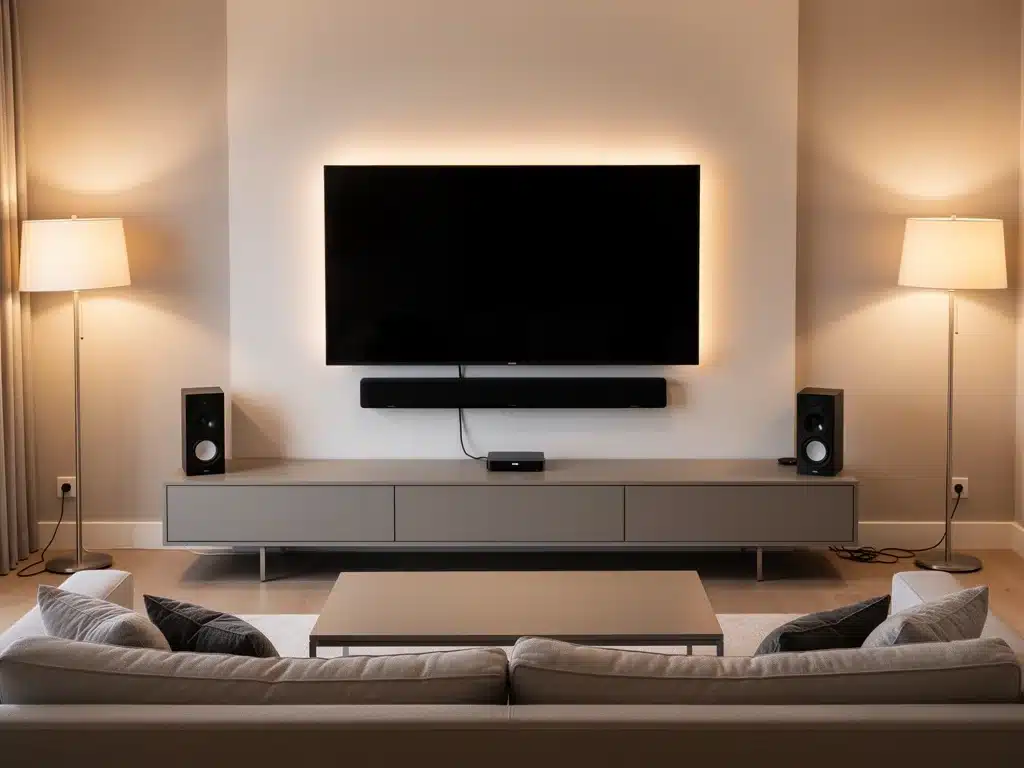
To fully experience spatial audio, specific hardware considerations come into play. While some headphones can simulate spatial audio, dedicated multi-channel speaker systems or soundbars with upward-firing drivers offer the most convincing experience.
Look for soundbars or AV receivers that support formats like Dolby Atmos or DTS:X, which are foundational for many spatial audio implementations. These systems can decode the metadata that tells your speakers where to place individual sounds.
Ensuring your streaming device and cables are capable of passing through these advanced audio formats is also crucial. HDMI eARC, for example, is essential for transmitting high-bandwidth immersive audio from your TV to your sound system when Decoding 2026’s Audio Codecs for Streaming.
The Future of Personal Audio and Headphone Technologies
Headphones are also at the forefront of spatial audio innovation. Many premium headphones now feature advanced processing that can track head movements, making the soundstage feel fixed in space even as you move your head.
The development of personalized HRTF (Head-Related Transfer Function) profiles is another exciting area. This technology customizes the spatial audio experience to your unique ear and head shape, making the immersive effect even more convincing.
As codecs become more efficient and powerful, we can expect even more sophisticated spatial audio processing to be integrated directly into headphones, delivering stunning immersive experiences without the need for complex speaker setups, enhancing Decoding 2026’s Audio Codecs for Streaming.
Emerging Technologies and Future-Proofing Your Setup
The rapid pace of technological advancement means that what’s cutting-edge today might be standard tomorrow. Staying informed about emerging technologies is crucial for future-proofing your audio setup and ensuring long-term enjoyment.
Beyond codecs, advancements in AI-driven audio upscaling, personalized sound profiles, and even haptic feedback are on the horizon. These innovations promise to further blur the lines between digital and physical sound experiences.
While it’s impossible to predict every future development, focusing on versatile and upgradeable components will serve you well. This approach ensures your investment remains relevant as the streaming audio landscape evolves.
AI-Driven Audio Upscaling and Personalization
Artificial intelligence is increasingly being used to enhance audio quality beyond what traditional codecs can achieve. AI upscaling can intelligently fill in missing details in lower-resolution audio, making it sound richer and more expansive.
Personalized sound profiles, enabled by AI, can analyze your hearing preferences and the acoustics of your listening environment to tailor the audio output specifically for you. This creates a bespoke listening experience that maximizes clarity and enjoyment.
These AI-powered enhancements work in conjunction with advanced codecs, pushing the boundaries of what’s possible in digital audio. They represent a significant leap forward in delivering truly customized and high-fidelity sound, especially for Decoding 2026’s Audio Codecs for Streaming.
Modular Systems and Software-Defined Audio
The trend towards modular audio systems and software-defined audio solutions offers flexibility and longevity. Instead of replacing entire components, modular systems allow you to upgrade specific parts, such as DACs or processing modules.
Software-defined audio relies heavily on firmware updates and cloud-based processing, meaning your hardware can gain new features and improved performance over time without physical changes. This makes your setup more adaptable to future codec developments.
Investing in platforms that prioritize software updates and modularity ensures that your system can evolve with the latest audio technologies, keeping you at the forefront of streaming sound quality for Decoding 2026’s Audio Codecs for Streaming.
Common Pitfalls and How to Avoid Them
While striving for the best streaming sound quality, it’s easy to fall into common traps that can hinder your efforts. Being aware of these pitfalls can save you time, money, and frustration.
From overspending on unnecessary upgrades to neglecting fundamental setup aspects, many factors can detract from your audio experience. A balanced and informed approach is always best.
By avoiding these common mistakes, you can make more effective decisions and ensure that your efforts in optimizing your setup truly lead to a superior listening experience with Decoding 2026’s Audio Codecs for Streaming.
Beware of Snake Oil and Exaggerated Claims
The audio industry, like many others, is not immune to exaggerated claims and products that promise miraculous improvements without delivering. Be skeptical of accessories or cables that claim to offer dramatic sound enhancements at exorbitant prices without scientific backing.
Focus on foundational elements: source quality (streaming tier), clean signal path (DAC, amplifier), and proper speaker/headphone setup. These elements offer the most significant and verifiable improvements in sound quality.
Consult reputable reviews and objective measurements when considering new equipment. Trust your ears, but also rely on credible information to make informed decisions about your audio investments for Decoding 2026’s Audio Codecs for Streaming.
Don’t Neglect the Basics: Power and Cables
Often overlooked, the quality of your power supply and cables can subtly impact your audio experience. While not as dramatic as a new DAC, clean power and well-shielded cables contribute to a quieter background and clearer sound.
Ensure your audio equipment is plugged into a dedicated power strip or conditioner that offers surge protection and some level of noise filtration. This can prevent electrical interference from degrading your audio signal.
Use high-quality, appropriately shielded cables for all connections, especially digital and analog interconnects. While expensive cables aren’t always necessary, cheap, unshielded options can introduce noise and signal degradation, affecting Decoding 2026’s Audio Codecs for Streaming.
The Role of Content Creators in Audio Quality
While your setup plays a crucial role, the ultimate quality of your streaming audio begins with the content creators themselves. High-quality recordings and mastering are foundational to a great listening experience.
Even with the most advanced codecs and playback systems, poorly recorded or mixed audio will always sound inferior. Content creators are increasingly adopting best practices to ensure their work sounds its best on streaming platforms.
This symbiotic relationship between creation and playback is essential for the future of streaming audio. As consumers demand better quality, creators are incentivized to deliver it, pushing the entire ecosystem forward, especially for Decoding 2026’s Audio Codecs for Streaming.
Mastering for Streaming Platforms
Mastering engineers are now specifically optimizing audio for various streaming platforms and their respective codecs. This involves ensuring dynamic range is preserved while meeting loudness standards, preventing over-compression that can lead to listener fatigue.
The concept of ‘mastered for iTunes’ or ‘mastered for Spotify’ reflects this trend, where audio is prepared to sound optimal within the specific parameters of each service. This attention to detail at the production stage is invaluable.
As immersive audio grows, mastering for spatial formats adds another layer of complexity, requiring specialized tools and expertise to ensure sounds are accurately placed and balanced in a three-dimensional space for Decoding 2026’s Audio Codecs for Streaming.
Monitoring Industry Standards and Best Practices
Content creators, recording studios, and streaming platforms continuously collaborate to establish new industry standards for audio quality. These standards guide the development of new codecs and ensure interoperability across different systems.
Organizations like the AES (Audio Engineering Society) play a vital role in defining these benchmarks, promoting best practices for recording, mixing, and mastering. Staying abreast of these developments is key for anyone involved in audio production.
For consumers, awareness of these standards provides confidence that the audio they are streaming has been crafted with care and precision, ensuring the best possible experience when Decoding 2026’s Audio Codecs for Streaming.
| Key Point | Brief Description |
|---|---|
| Next-Gen Codecs | Explores new lossless and immersive audio formats like MPEG-H 3D and enhanced LC3 for 2026 streaming. |
| Setup Optimization | Guides users through evaluating current devices, networks, and playback chains for better sound. |
| 4 Simple Steps | Practical advice: upgrade streaming tier, optimize network, use external DAC, and refine speaker placement. |
| Future-Proofing | Insights into AI audio, modular systems, and content creator roles for sustained high-quality audio. |
Frequently Asked Questions About Streaming Audio Quality
The most important codecs for 2026 include enhanced versions of LC3, MPEG-H 3D Audio for immersive experiences, and continued reliance on high-efficiency formats like Opus. Lossless options such as FLAC and ALAC will also gain more traction through premium streaming tiers. These codecs balance quality with bandwidth efficiency.
Many existing setups can handle new codecs, especially with software updates for streaming devices. However, to fully leverage immersive formats like spatial audio, you might need compatible hardware such as soundbars with Dolby Atmos or DTS:X support, or specific high-fidelity headphones. Assessing your current equipment is the first step.
While not strictly necessary for all users, an external DAC (Digital-to-Analog Converter) can significantly improve sound quality. It bypasses the often-inferior DACs built into streaming devices, providing a cleaner and more accurate conversion of digital audio, revealing more detail and clarity in your music. It’s a worthwhile upgrade for discerning listeners.
Your internet connection is crucial for high-quality streaming audio. Higher-resolution and lossless codecs demand more bandwidth. A stable, fast connection prevents buffering, dropouts, and ensures consistent delivery of high-bitrate audio. A wired Ethernet connection is generally preferred over Wi-Fi for critical streaming setups due to its reliability.
Spatial audio creates a three-dimensional sound experience, placing sounds all around you, similar to a live concert or cinema. You can experience it through compatible streaming services (e.g., Apple Music Spatial Audio) and hardware like Dolby Atmos-enabled soundbars, AV receivers, or headphones with head-tracking technology. It significantly enhances immersion.
What this means
The continuous evolution of audio codecs and streaming technologies underscores a clear trend towards higher fidelity and more immersive listening experiences.
Understanding and adapting to these changes, particularly those influencing Decoding 2026’s Audio Codecs for Streaming, is essential for every enthusiast.
By focusing on smart upgrades, network optimization, and proper setup, users can unlock the full potential of their existing systems.
This proactive approach ensures that as new standards emerge, your setup remains capable of delivering exceptional sound quality, keeping you at the forefront of digital audio innovation.